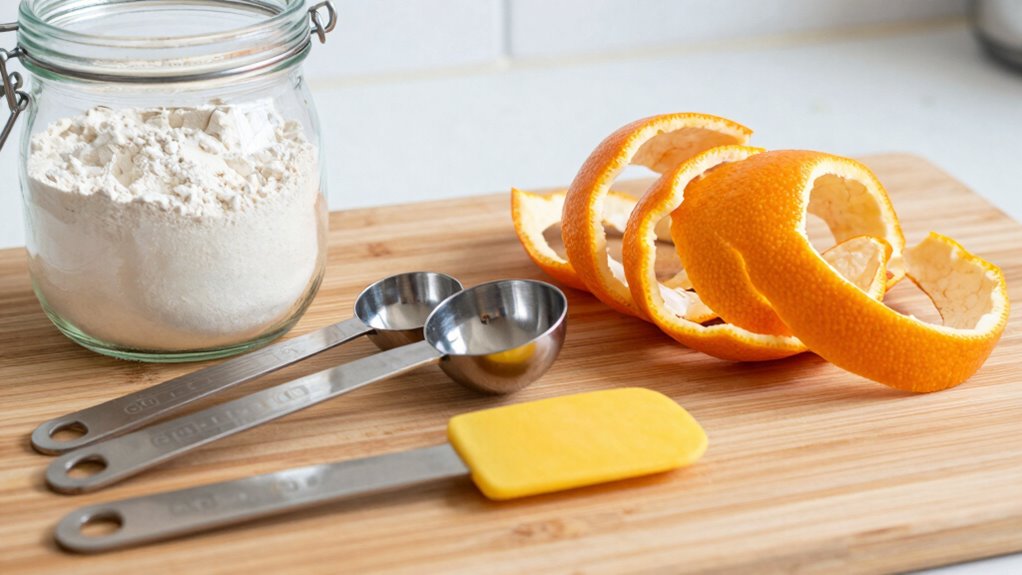

To keep flour, peels, and tools cleaner between bakes, make it a habit to wipe down surfaces and equipment with a damp cloth after each use. Wash your hands thoroughly before handling new dough to prevent cross-contamination. Store ingredients in sealed containers and keep tools organized and dry. Regularly clean special baking tools and inspect them for residue buildup. Consistently maintaining hygiene practices will help you stay ahead of any contamination issues—more useful tips await you.
Listen free for 30 days with Audible
Thousands of audiobooks and originals — cancel anytime.
As an affiliate, we earn on qualifying purchases.
Key Takeaways
- Store flour in sealed, airtight containers to prevent contamination and moisture absorption.
- Clean and sanitize peelings and tools thoroughly after each use and before storing.
- Wipe down work surfaces and tools regularly during baking sessions to minimize flour residue.
- Use designated tools for different baked goods to avoid cross-contamination.
- Implement a routine cleaning schedule for all equipment and storage areas to maintain hygiene.
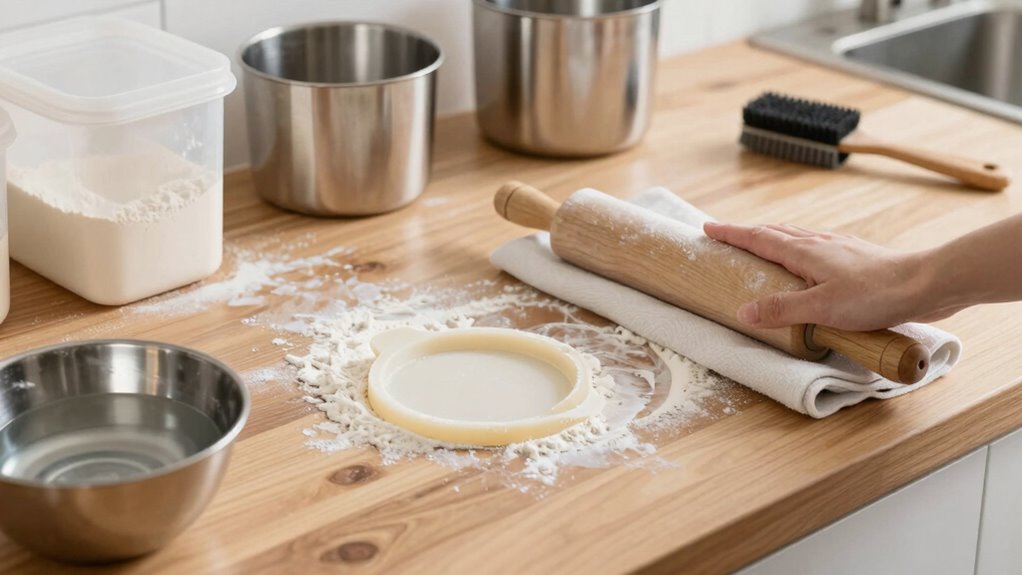
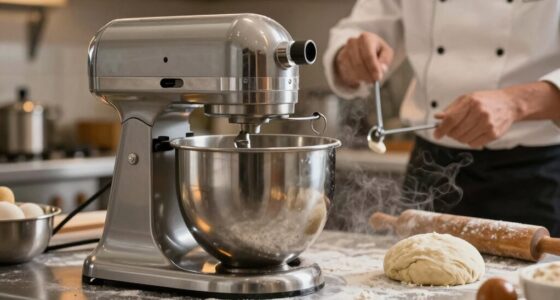
Maintaining cleanliness for your baking tools and ingredients between sessions is vital for producing the best results and preventing cross-contamination. When it comes to dough handling, keeping your workspace tidy minimizes the risk of unwanted bacteria transfer and guarantees your dough remains fresh and safe to bake. After each session, wipe down your work surface thoroughly, and wash your hands before handling new dough. This practice helps prevent any residual flour or dough from contaminating your next batch, especially if you’re switching between different types of baked goods. Additionally, clean your kneading boards and mixing bowls properly to avoid lingering residues that could affect the texture or taste of future doughs. Regularly inspecting and maintaining your baking tools ensures they stay in good condition and don’t harbor bacteria or mold over time. Proper storage techniques also play a role in keeping your tools and ingredients uncontaminated between bakes. Using appropriate cleaning techniques tailored for different materials can help extend the lifespan of your tools and maintain their effectiveness. Implementing effective sanitation practices further enhances the hygiene of your baking environment and reduces the risk of contamination. Incorporating routine cleaning schedules can help maintain a consistently hygienic workspace, especially during busy baking seasons.
Your oven also plays an important role in maintaining a clean baking environment. Regular oven maintenance isn’t just about ensuring it heats evenly; it’s about preventing baked-on residues that can ignite or produce unpleasant odors. After each use, wipe down the interior with a damp cloth once the oven cools, paying special attention to the door seals and removable racks. Periodically, run a self-cleaning cycle if your oven has that feature, but always follow the manufacturer’s instructions to avoid damage. Keeping the oven clean not only extends its lifespan but also guarantees consistent baking results.
airtight flour storage containers
As an affiliate, we earn on qualifying purchases.
As an affiliate, we earn on qualifying purchases.
Frequently Asked Questions
How Often Should I Deep Clean Baking Tools?
You should deep clean your baking tools every few weeks or after particularly messy bakes to maintain kitchen organization and guarantee proper baking tool maintenance. Regular thorough cleaning prevents residue buildup, keeps tools in top condition, and preserves hygiene. Pay special attention to scrubbing flour, dough, and other residues from peels and utensils. Incorporate deep cleaning into your routine to keep your baking tools in excellent shape and ready for your next baking session.
Can I Reuse Flour Stains on Baking Surfaces?
Reusing flour stains on your baking surface? Sure, why not—if you enjoy the thrill of unexpected flavors! Flour residue can harbor bacteria or old dough bits, so it’s best to wipe down or scrub your surface thoroughly before each use. Reusing stained flour isn’t worth risking contamination or ruining your baked goods with stale or moldy flavors. Keep your baking surface clean for the freshest, safest results every time.
What’s the Best Way to Prevent Tool Rust?
To prevent tool rust, you should regularly dry your tools thoroughly after each use, especially if they’re exposed to moisture. Apply a light coat of oil or rust inhibitor as part of your tool maintenance routine, and store them in a dry, climate-controlled place. Avoid leaving tools damp or exposed to humidity, which accelerates rust formation. Consistent rust prevention practices keep your tools in top shape for longer.
Are Natural Cleaning Solutions Safe for All Tools?
Natural remedies can be safe for most tools if used properly, but you should always consider tool safety first. For example, vinegar and baking soda are gentle cleaning agents that help remove residue without harsh chemicals. However, avoid prolonged exposure to acidic solutions on certain metals. To keep your tools in top shape, test natural cleaning solutions on a small area first, ensuring they won’t cause damage or corrosion.
How Do I Store Baking Tools to Prevent Contamination?
You should store your baking tools in a dedicated, airtight container or a sealed drawer to keep out dust and pests—think of it as guarding your baking treasures from a tiny army of contaminators! Use proper baking storage and organize tools by type, keeping peels, scrapers, and brushes separate. Regularly clean and dry your tools before storage, creating a fortress of cleanliness that prevents cross-contamination and keeps your baking pristine.
As an affiliate, we earn on qualifying purchases.
Conclusion
Keeping your baking tools and workspace clean isn’t just about hygiene—it’s about respecting your craft. Regularly cleaning flour, peels, and tools guarantees every bake turns out beautifully and safely. Remember, a clean kitchen is a happy kitchen, and “A stitch in time saves nine.” When you stay proactive about cleanliness, you’ll enjoy better results and a more enjoyable baking experience. Stay diligent, and your baked goods will always shine.
As an affiliate, we earn on qualifying purchases.
As an affiliate, we earn on qualifying purchases.
Flea & tick season Picks
flea and tick prevention
As an affiliate, we earn on qualifying purchases.