
For most home pizza makers, I’d choose the VEVOR 8.6-inch electric deli slicer as the best overall pick because its powered blade is better suited to making repeatable slices than a hand-operated frozen-meat cutter. The SupMaKin 17-in-1 slicer stands out for adjustable thin cuts, while the Befen manual slicer is a simpler choice for occasional batches of chilled or partially frozen meat. The main tradeoffs are electric speed versus counter space and cleaning, and manual control versus the effort and limits of hand slicing. A pizza wheel can cut cooked pizza, but it is not a substitute for slicing raw toppings. Read on for the full breakdown, selection criteria, and advice on choosing a slicer that fits your toppings and kitchen.

Get baking supplies delivered free with Prime
- Fast, free delivery on millions of items
- Prime Video, Amazon Music and more included
- Member-only deals all year
Complete the kit


Key Takeaways
- VEVOR is the strongest fit for frequent slicing: its electric format and 8.6-inch blade make it better suited than the manual models to producing repeated deli-style cuts, though it takes more space and cleanup.
- SupMaKin prioritizes thickness choice: its adjustable 2/4 mm settings and 17-in-1 design suit buyers who want control over thin cuts, but the many settings may be more than an occasional pizza cook needs.
- The manual cutters are a distinct group: Befen and the other stainless-steel models favor compact, hands-on slicing, but they call for more effort and work best with suitably firm meat.
- The KitchenAid pizza wheel has a different job: it cuts finished pizza rather than raw meat, so it belongs in this roundup only as an accessory for serving, not as a meat slicer.
- Match the tool to your topping routine: repeated batches of pepperoni-style or deli-thin meat favor an electric slicer; occasional home cooking may call for a manual cutter, while neither format replaces a sharp knife for every topping.


| meat slicers for pizza topping | Material | Blade length | Operation |
|---|---|---|---|
| Manual Frozen Meat Slicer by B | Stainless steel | 196mm (7.9 inches) | Manual |
| Stainless Steel Food Slicer | Stainless steel | 200mm | Manual |
| Manual Frozen Meat Slicer for | Stainless steel | 7.9 inches | Manual |
| VEVOR Meat Slicer | — | — | — |
| Manual Frozen Meat Slicer for | Stainless steel | 8 inches | — |
| KitchenAid Classic Pizza Wheel | — | — | — |
| SupMaKin Fresh Meat Slicer wit | — | — | Manual |
More Details on Our Top Picks
Manual Frozen Meat Slicer by Befen – Stainless Steel Home Meat Cutter
For pizza cooks who want thin, even frozen-meat slices without an electric appliance, the Befen is the most balanced manual choice here. Its adjustable range reaches from 0.2mm to 20mm, so you can aim for delicate beef or ham toppings rather than being limited to one cut. The 7.9-inch blade and stainless-steel construction suit occasional home prep, while its 2.3kg weight is manageable to move between uses. Compared with the VEVOR electric slicer, this requires hand effort and properly frozen meat, but it avoids a motor and offers very thin adjustment. The SupMaKin Fresh Meat Slicer is the more relevant alternative for fresh meat; Befen is better suited to frozen cuts. Skip it if you need to slice large batches quickly.
Pros:- Adjustable 0.2mm–20mm thickness supports very thin pizza toppings as well as thicker cuts.
- Stainless-steel construction is suited to repeated home use.
- Compact listed dimensions make it easier to store than the VEVOR electric slicer.
- Includes accessories and instructions for setup and use.
Cons:- Works best with properly frozen meat, so it is not a fresh-meat slicer.
- Manual slicing takes effort and is slow for large batches.
Best for: Home pizza makers who prepare modest amounts of frozen beef or ham and want control over thin topping slices.
Not ideal for: Cooks who need fast, repeated slicing of fresh meat or large quantities; manual effort and the frozen-meat requirement are limiting.
- Material:Stainless steel
- Blade length:196mm (7.9 inches)
- Slice thickness:0.2mm–20mm
- Dimensions:460mm × 160mm × 120mm
- Weight:2.3kg
- Operation:Manual
Our verdict“Choose the Befen for adjustable, thin frozen-meat toppings in a home kitchen where batch size is modest.”
Stainless Steel Food Slicer – Manual Frozen Meat Slicer for Home Use
This manual slicer suits cooks who want a long, extended blade for cutting frozen meat into broader pieces before topping pizza or preparing other meals. Its 200mm blade is slightly longer than the Befen’s listed 196mm blade, which may help when working with wider portions, though the supplied details do not give a thickness-adjustment range. That makes the Befen the clearer choice for buyers who prioritize dialing in very thin slices. The stainless-steel body and 3mm blade thickness signal a sturdy manual format, but there is no motor to take over when the topping prep grows. The sharp blade also calls for careful handling. Choose this over the VEVOR only if you prefer a simple hand-operated tool and do not need powered, repeatable slicing.
Pros:- 200mm extended blade accommodates broader cuts than the Befen’s listed 196mm blade.
- Thickened stainless-steel construction is designed for durable home use.
- Can handle several frozen ingredients, including meat and cheese.
- Manual format does not require a motor or powered operation.
Cons:- No slice-thickness range is provided, making fine topping control hard to judge.
- Manual operation can be labor-intensive for larger quantities.
- Sharp blade requires careful handling during use and cleaning.
Best for: Home cooks preparing smaller portions of frozen beef, mutton, ham, or cheese who value a longer manual blade.
Not ideal for: Pizza makers who need a specified ultra-thin setting, powered slicing, or enough throughput for frequent large batches.
- Material:Stainless steel
- Blade length:200mm
- Blade thickness:3mm
- Plate thickness:1.6mm
- Operation:Manual
Our verdict“Pick this model for straightforward manual slicing of modest portions, but choose the Befen if a stated thin-slice range matters more.”
Manual Frozen Meat Slicer for Hot Pot, Stainless Steel Meat Cutter for Beef, Mutton, Pork
Among the manual options, this model is the most complete package for cooks who want spare parts and basic prep accessories alongside adjustable 0.2mm–20mm slicing. That range gives it the same fine-cut potential as the Befen, while its listed size and 2.3kg weight match a substantial countertop tool rather than a compact gadget. The package includes a spare blade, meat holder, suction cups, wrench, bags, and instructions, which gives buyers more supplied equipment than the simpler stainless-steel manual slicer with a 200mm blade. Those extras do not remove the main limitation: meat needs to be properly frozen, and hand operation is a poor fit for large topping batches. Compared with VEVOR’s electric model, this trades speed for manual control and a more extensive accessory set.
Pros:- 0.2mm–20mm adjustment supports very thin toppings and thicker cuts.
- Includes a spare blade, meat holder, suction cups, wrench, bags, and instructions.
- Stainless-steel construction is suited to frozen meat slicing.
- Listed dimensions and weight give buyers a clear sense of its countertop footprint.
Cons:- Requires properly frozen meat for best results.
- Manual slicing can be tiring when preparing large quantities.
- The 18.1-inch length may be awkward to store in a small kitchen.
Best for: Home cooks who want a manual slicer with a wide thickness range and supplied spare blade and handling accessories.
Not ideal for: Small-kitchen owners or anyone regularly preparing large volumes of pizza toppings; its footprint and manual operation can be inconvenient.
- Material:Stainless steel
- Blade length:7.9 inches
- Thickness adjustment:0.2mm–20mm
- Size:18.1 × 6.3 × 4.7 inches
- Weight:2.3kg
- Included accessories:Spare blade, food bags, meat holder, suction cups, Allen wrench, instruction manual
- Operation:Manual
Our verdict“Choose this manual model if a broad thickness range and bundled accessories matter more than speed or compact storage.”
VEVOR Meat Slicer, 8.6-inch Electric Deli Slicer with 2 SUS420 Blades
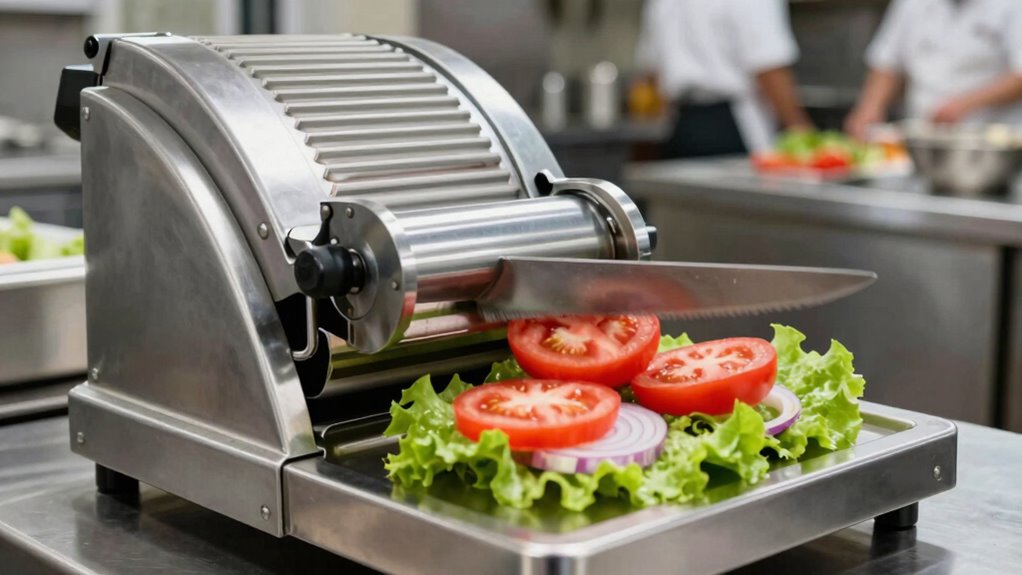
When pizza night calls for a pile of evenly sliced toppings, the VEVOR stands apart from the manual models by using a 200W motor rather than relying on hand force. Its 0–15mm setting covers thin meat slices, and the two blades—serrated and non-serrated—offer more flexibility across meat, vegetables, and bread. The dual security lock and suction cups address stability during powered cutting, while removable parts support cleanup. Compared with the Befen and the other hand slicers, this is better suited to repeated prep, but it is heavier at 14 pounds, occupies a substantial counter area, and requires hand washing. Its maximum thickness is also lower than the manual models’ stated 20mm range. Pick it for throughput, not minimal storage or the finest listed adjustment.
Pros:- 200W motor reduces hand effort during repeated slicing.
- Serrated and non-serrated blades handle different foods and cutting needs.
- 0–15mm adjustment includes thin settings suitable for pizza toppings.
- Dual security lock and suction cups support steadier operation.
Cons:- At 14 pounds, it is heavier and less convenient to store than the manual options.
- Maximum listed thickness is 15mm, below the 20mm range of several manual models.
- Maintenance requires hand washing.
Best for: Households that regularly prepare larger batches of sliced meat, vegetables, or other ingredients for pizza and meals.
Not ideal for: Buyers with limited counter or storage space, or anyone who wants a lightweight manual tool with a 20mm maximum setting.
- Blade size:8.6 inches
- Motor power:200W
- Blade material:SUS420 stainless steel
- Blades:Serrated and non-serrated
- Adjustable thickness:0–0.6 inches (0–15mm)
- Weight:14 pounds
- Dimensions:18.11 × 11.42 × 12.32 inches
- Operation mode:Semi-automatic
- Safety features:Dual security lock and suction cups
Our verdict“Choose the VEVOR for powered, repeated topping prep if you can spare the counter space and accept hand-wash maintenance.”
Manual Frozen Meat Slicer for Home Cooking – Upgraded Stainless Steel Meat Cutter for Beef & Mutton
This home-cooking slicer is a practical match for buyers who want adjustable frozen-meat cuts and a suction base to help hold the tool steady. Its 0.2mm–20mm range is suited to thin beef or mutton toppings, and the package includes a blade protector, wrench, and bags. Compared with the accessory-heavy B0DNQ6QHDQ, this model lists a more straightforward set of included components; unlike the VEVOR, it needs no motor but also cannot match powered throughput. The listed 17-inch length still takes storage space, and manual operation becomes tiring when a pizza night turns into repeated batch prep. The stated food range is limited: it is intended for frozen meat and hard vegetables, not fresh meat or soft foods. That makes it a focused home tool rather than an all-purpose slicer.
Pros:- 0.2mm–20mm adjustment allows very thin cuts for meat toppings.
- Suction cups help keep the manual slicer steady during use.
- Detachable parts are described as easy to clean.
- Package includes 10 bags, a wrench, and a blade protector.
Cons:- Manual operation takes effort for large batches.
- Not suited to fresh meat or soft foods.
- Its 17-inch length can be awkward to store in a small kitchen.
Best for: Home pizza makers who mostly slice frozen beef or mutton and want adjustable thickness with a suction base and blade protector.
Not ideal for: Cooks who need fresh or soft foods sliced, prepare large batches, or have little room for a 17-inch tool.
- Material:Stainless steel
- Blade length:8 inches
- Dimensions:17 × 6.7 × 3.5 inches
- Blade shape:Rectangular
- Operation mode:Manual
- Included components:10 bags, manual slicer, suction cups, alloy blade, wrench, blade protector
- Food use:Frozen meats and hard vegetables
Our verdict“Choose this model for occasional frozen-meat topping prep when countertop stability and a blade protector are useful additions.”
KitchenAid Classic Pizza Wheel with Sharp Blade, 9-Inch, Black
The KitchenAid Classic Pizza Wheel is the finishing tool in this lineup, not a slicer for preparing raw toppings. Its 9-inch wheel and sharp stainless steel blade are made to portion a topped pizza cleanly at the table, while the finger guard helps keep hands clear during each cut. Unlike the VEVOR electric deli slicer, it cannot shave meat or cheese into thin slices; compared with the SupMaKin Fresh Meat Slicer, it takes up less prep space and serves a different stage of pizza making. Its dishwasher-safe design also makes cleanup straightforward after cutting through sauce and cheese. The tradeoff is limited versatility: it cuts finished food rather than preparing ingredients, and the handle may feel cramped for very large hands.
Pros:- Sharp 430 stainless steel blade is suited to clean cuts through pizza crust
- Finger guard adds protection while cutting
- Dishwasher safe for simpler cleanup
- Ergonomic handle supports a comfortable grip for many users
Cons:- Does not slice or prepare meat toppings
- Handle may not suit users with very large hands
- Warranty information lists a one-year replacement period alongside a lifetime limited warranty
Best for: Home cooks who want a simple, easy-to-clean wheel for portioning finished pizzas after preparing toppings separately
Not ideal for: Shoppers seeking a machine to slice raw meat, deli-style toppings, or large batches of ingredients
- Blade material:430 stainless steel
- Size:9 inches
- Color:Black
- Dishwasher safe:Yes
- Warranty:Lifetime limited; 1-year replacement
- Product type:Pizza wheel
Our verdict“Choose this wheel to portion finished pizza neatly, not to slice meat or prepare toppings.”
SupMaKin Fresh Meat Slicer with SteadyGrip, Adjustable 2/4 mm, 17-in-1
For cooks who want thin pieces of fresh meat on homemade pizza, the SupMaKin Fresh Meat Slicer is the most directly targeted option here. Its 17 stainless steel blades and two thickness settings—2 or 4 mm—offer more defined cuts than the KitchenAid Classic Pizza Wheel, which only portions food after it is cooked. The stated use is fresh meat, so this is better suited to prepping ingredients than the frozen-meat cutters elsewhere in the roundup; it is also not a substitute for the VEVOR electric deli slicer when you need powered, repeated slicing. The compact, wall-mountable design can suit a crowded kitchen, and a cleaning brush is included. The tradeoff is hands-on effort: manual slicing can become tiring for larger batches, and frozen or deli meats are outside its recommended use.
Pros:- 17 stainless steel blades are designed for fine cuts of fresh meat
- Offers 2 mm and 4 mm thickness settings
- Compact, wall-mountable design can save storage space
- Includes a cleaning brush for maintenance
Cons:- Not suitable for frozen or deli meats
- Manual operation can take effort when preparing large batches
- Fresh-meat focus limits its usefulness for other topping-prep needs
Best for: Pizza cooks who prepare small batches of fresh pork, beef, chicken, or salmon and want thin 2 or 4 mm slices
Not ideal for: People who need to slice frozen or deli meat, process large quantities, or prepare toppings with an electric machine
- Blade material:Stainless steel
- Number of blades:17
- Thickness settings:2 mm or 4 mm
- Recommended use:Home use
- Suitable ingredients:Fresh pork, beef, chicken, and salmon
- Model number:MS01
- Warranty:2 years
- Operation:Manual
Our verdict“Pick this manual slicer for small batches of thinly cut fresh meat, but choose an electric model for heavier prep.”

How We Picked
I ranked these options by how directly they address the task of preparing meat for pizza: producing usable, repeatable slices; giving the cook control over thickness; and handling the amount of meat a home pizza session is likely to require. I also weighed day-to-day practicality, including setup, storage, cleaning demands, and whether the tool is designed to cut raw meat or serve cooked pizza. Product names and supplied specifications guided the comparison; I have not treated unprovided details such as exact cutting capacity or cleaning procedures as established facts.
The VEVOR electric slicer leads because a powered deli-style machine is the clearest match for frequent, even slicing. SupMaKin ranks as a useful adjustable alternative, while the manual cutters suit buyers who value a simpler, hands-on setup more than speed. The manual models are separated by their stated use and design rather than assumed performance differences. The KitchenAid pizza wheel ranks last for this specific task because it cuts cooked pizza, not meat toppings; it may help at serving time, but it cannot replace a slicer.
Factors to Consider When Choosing Meat Slicers For Pizza Toppings
Choosing a meat slicer for pizza is less about chasing the thinnest possible cut and more about matching the tool to your ingredients, batch size, and willingness to clean and store it. These broader checks can prevent a mismatch that product features alone may not make obvious.
Choose for Your Topping and Its Starting Temperature
Different toppings ask different things of a slicer: firm cooked ham is not the same task as raw beef, soft fresh mozzarella, or a very cold block of meat. Manual frozen-meat cutters are intended for firm, cold ingredients, so check the product’s stated use rather than assuming a slicer handles every texture. Partially freezing suitable meat can help it hold its shape during cutting, but a fully hard-frozen block may be difficult or unsafe to force through a blade. For delicate or wet ingredients, a sharp knife may offer more control than a machine built for firmer meat. Match both the ingredient and its preparation state to the maker’s guidance.
Decide How Much Slice Consistency You Need
Slice thickness changes how a topping cooks and how evenly it spreads across a pizza. Thin slices can distribute quickly and suit a light topping layer, while thicker pieces may remain more distinct after baking. If every batch needs to look and cook alike, prioritize a slicer with a clear thickness adjustment and a stable feed method. A manual model can work well when you only need a small amount and can take time with each cut. Avoid choosing a wide adjustment range just because it sounds versatile; settings matter only if they cover the thicknesses you actually use.
Balance Batch Size Against Space and Cleanup
An electric slicer can make repeated cuts less laborious, but it claims counter space during use and storage, and its blade area calls for careful cleaning after raw meat. A compact manual cutter may be easier to put away, though it shifts more work to your hands and may slow down a large pizza-prep session. Before buying, picture where the machine will sit while you load meat, collect slices, and clean the parts. A slicer that is awkward to set up can become a rarely used appliance even if its cutting format suits your recipes. For occasional toppings, simpler storage and maintenance may matter more than speed.
Treat Safety and Cleaning as Part of the Cutting Job
Meat residue can collect around blades and food-contact surfaces, so cleaning is part of the work rather than an afterthought. Check the manufacturer’s instructions for which components can be removed and how they should be washed; do not assume a blade or assembly is dishwasher-safe. Look for a stable base, a secure way to hold the food, and a design that keeps hands away from the cutting edge. Keep raw-meat equipment separate from ready-to-eat toppings and clean it promptly to reduce cross-contamination risk. If safe access for cleaning is unclear, that uncertainty is a reason to favor a simpler tool.
Pay for Capacity or Control Only When You Will Use It
A larger electric machine makes more sense when you regularly prepare several pizzas or slice meat for other meals. For one pizza at a time, its footprint and cleaning load may outweigh the time saved. Adjustable manual models can provide useful thickness control without the same powered format, but they still require steady handling and repeated effort. Compare the work you do most often—not an occasional ambitious recipe—with the features you would be paying for in space and upkeep. A sharp knife may remain the practical answer for small, infrequent batches.
Separate Meat Preparation From Pizza Serving
A pizza wheel and a meat slicer solve different problems: one cuts the baked pie, and the other prepares ingredients before baking. Buying a pizza cutter as a substitute for a meat slicer will not produce raw meat slices. If you already have a dedicated way to prepare toppings, a wheel can still be useful for portioning the finished pizza. Keep that distinction clear when comparing tools marketed around pizza, since the word “pizza” can describe either topping prep or serving. Choose based on the step you need help with.
Frequently Asked Questions
Can I use a pizza wheel to slice meat for toppings?
No. A pizza wheel is designed to cut through cooked pizza, not to make even slices from raw or chilled meat. Its rolling blade and handling position do not provide the same control or food support as a meat slicer. For meat toppings, use a suitable slicer or a sharp knife, following the tool maker’s guidance for the ingredient. The KitchenAid wheel in this lineup is best viewed as a serving accessory, not a meat-prep option.
Is an electric slicer worth the extra setup for occasional pizza nights?
It depends on how much meat you slice and whether you also prepare deli-style cuts for other meals. An electric model can reduce effort across repeated slices, but it takes counter and storage space and requires careful cleaning after use. If you only prepare a small topping portion now and then, a manual cutter or sharp knife may be easier to manage. Think about total prep and cleanup time, not just how quickly the blade cuts.
Should I freeze meat before using a manual slicer?
Some manual frozen-meat cutters are intended for firm, cold meat, and chilling or partially freezing suitable meat can help it hold its shape. That does not mean every slicer should be used with a fully frozen block, or that every kind of meat can be prepared this way. Follow the specific product instructions and avoid forcing food through a blade. If the meat is too hard to cut safely, let it soften according to the maker’s guidance before continuing.
Which kind of slicer makes the most sense for thin, even pizza toppings?
For frequent batches where repeatable cuts matter, an electric deli-style slicer is the clearest fit in this lineup. The SupMaKin’s stated 2/4 mm adjustment offers a manual route for cooks who want defined thickness choices, while the electric VEVOR is better suited to reducing hand effort over repeated cuts. A manual cutter can still work for small batches if the meat is firm and the user is comfortable guiding each slice. Check the product’s adjustment range and intended ingredients before treating any model as a solution for every topping.
Do I need a dedicated meat slicer if I only make one pizza at a time?
Not necessarily. A dedicated slicer is easier to justify when you prepare meat often, want consistent thickness, or use the same tool for other meals. For occasional small portions, a sharp knife may take less time to set up and clean than either an electric or manual slicer. Consider whether your toppings are difficult to cut evenly by hand and how much counter space you can spare. If those needs are modest, skip the appliance rather than buying capacity you are unlikely to use.
Conclusion
For the best overall, I’d pick the VEVOR electric deli slicer for regular batches and repeatable cuts. The best value in practicality is a manual stainless-steel cutter such as the Befen when you slice occasionally and prefer a simpler, hands-on approach. For a more adjustable manual option, SupMaKin is the best fit for cooks who want set thickness choices; VEVOR is the stronger premium-style pick for buyers willing to trade space and cleanup for powered slicing. A first-time buyer making small batches may be better served by a basic manual cutter—or a sharp knife—than by a large electric appliance. For a specific serving need, choose the KitchenAid wheel to cut finished pizza, but not to prepare meat toppings.
Halloween Picks
halloween
As an affiliate, we earn on qualifying purchases.