
To thicken your Neapolitan sauce, simmer it gently over medium heat, stirring occasionally. Allow the liquid to evaporate slowly, which will intensify flavors and create a velvety texture. Keep an eye on the sauce so it doesn’t scorch or become too thick, and remove it from heat just before reaching your desired consistency. If you’d like to master this technique and achieve perfect results, there’s more to discover about the process.
Key Takeaways
- Begin with a gentle simmer over medium heat to slowly evaporate excess water and prevent scorching.
- Stir occasionally to ensure even reduction and avoid sticking or burning.
- Monitor the sauce closely, removing from heat just before reaching your desired thickness to prevent over-thickening.
- As the sauce reduces, flavors like herbs and garlic become more concentrated, enhancing overall taste.
- Use an appropriate sauce-pan for even heat and practice patience for a velvety, rich Neapolitan sauce.

Have you ever wondered how chefs achieve a rich, flavorful sauce with a perfect consistency? The secret often lies in the technique of reducing sauce. When you reduce a sauce, you’re fundamentally cooking it down by simmering or boiling to evaporate excess water. This process concentrates both the sauce’s flavors and its thickness, resulting in a more intense, satisfying taste and a desirable sauce consistency. It’s a simple yet powerful method that transforms a watery, bland mixture into a luscious, velvety sauce that clings beautifully to your pasta or dish.
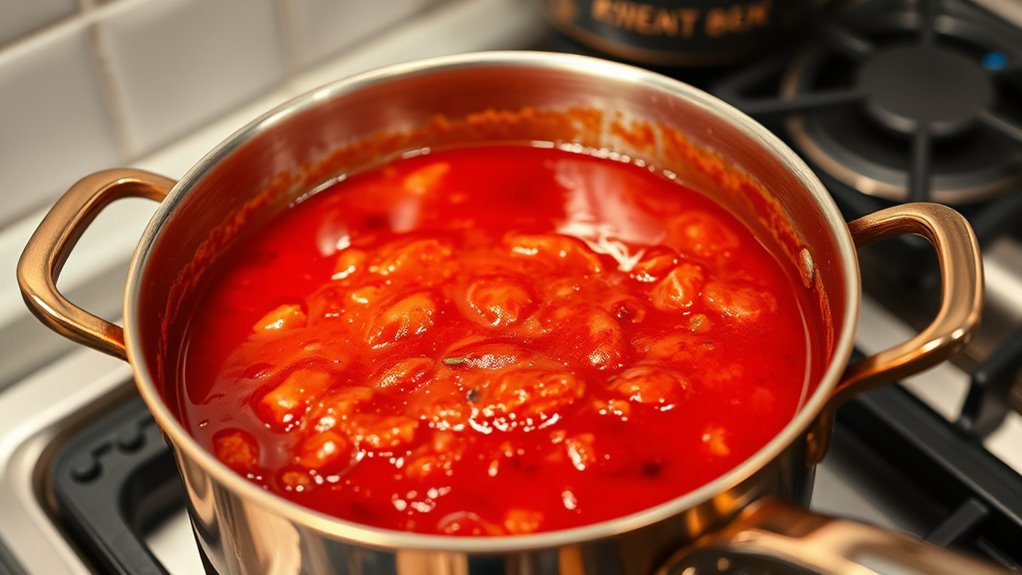
To begin, you want to bring your sauce to a gentle simmer over medium heat. High heat can cause the sauce to scorch or develop an uneven texture, so patience is key. As the liquid reduces, you’ll notice it thickening and darkening slightly. This isn’t just about losing water; it’s about intensifying flavor. Every minute of simmering allows the flavors to meld and deepen, making the sauce richer and more complex. Keep an eye on it and stir occasionally to prevent sticking or burning at the bottom of the pan. Stirring helps distribute heat evenly and ensures the sauce reduces uniformly.
The process of reduction directly impacts sauce consistency. As water evaporates, the sauce becomes thicker and more viscous. You want to stop simmering once you’ve achieved your desired thickness. Remember, the sauce continues to thicken slightly even after you remove it from heat, so it’s wise to take it off just before it reaches your ideal consistency. If you’re aiming for a smooth, glossy finish, you might want to strain the sauce to remove any solids or impurities that could disrupt its texture.
Flavor concentration is another critical benefit of reduction. The longer you simmer, the more flavors intensify. This means that subtle ingredients like herbs, garlic, or spices become more pronounced, giving your sauce a layered, robust profile. Be cautious with seasoning—if you add salt or spices too early, they can become overly concentrated, making the sauce too salty or overpowering. It’s best to season gradually and taste as you go, ensuring a balanced, flavorful result.
Additionally, using the right sauce-pan or pot can influence the efficiency and evenness of the reduction process. In essence, reducing sauce is about patience and attention. It’s a precise technique that demands focus, but the payoff is a beautifully thick, intensely flavored sauce that elevates your dish from good to great. With practice, you’ll master the art of cooking down your sauce to just the right consistency and flavor, giving your Neapolitan or any other sauce a professional-quality finish.
Frequently Asked Questions
How Do I Prevent Burning While Reducing Sauce?
To prevent burning while reducing sauce, you should stir frequently to prevent sticking and scorching at the bottom. Use a larger pot to distribute heat evenly and give the sauce room to simmer without overflowing. Keep the heat at a gentle simmer rather than high, and stay attentive. Stir often, especially as the sauce thickens, to ensure it cooks evenly and doesn’t stick or burn.
What Is the Ideal Simmering Temperature for Reduction?
Your sauce’s flavor hinges on perfect temperature control, so aim for a gentle simmer around 185-205°F (85-96°C). This range is like a lullaby for your sauce—steady and calm. Use simmering techniques such as lowering the heat once bubbles form slowly. Keep a close eye, stirring occasionally, to prevent burning, and you’ll achieve a beautifully thick, rich sauce without losing that vibrant Neapolitan essence.
Can I Add Other Ingredients During Reduction?
Yes, you can add ingredient variations during reduction to enhance flavor. Just make certain you add them gradually, tasting as you go, so you don’t overpower the sauce. Flavor enhancements like herbs, garlic, or a splash of wine work well. Be mindful that some ingredients may affect the consistency, so adjust the simmering time accordingly. This technique lets you customize your sauce to suit your taste perfectly.
How Long Should I Reduce a Sauce for Optimal Thickness?
You should reduce your sauce for about 15 to 30 minutes, depending on how thick you want it. As it simmers, imagine the sauce viscosity gradually intensifying like a swirling cloud of flavors, concentrating the taste with each bubble. Keep an eye on it, stirring occasionally, until it reaches your desired consistency. The longer you reduce, the richer the flavor concentration and the thicker the sauce becomes.
Does Reducing Sauce Change Its Flavor Profile?
Yes, reducing sauce changes its flavor profile by intensifying flavor concentration. As you simmer, the flavors become richer and more pronounced, which can enhance the overall taste. However, it also thickens the sauce and may alter the acidity balance, making it sharper or more mellow depending on the ingredients. Keep tasting as you reduce, so you can adjust seasonings accordingly to maintain a well-balanced, flavorful sauce.
Conclusion
By reducing your sauce, you intensify its flavors and achieve that perfect, thick Neapolitan consistency. Remember, a well-reduced sauce can concentrate flavors by up to 50%, making every bite richer and more satisfying. So, next time you cook, don’t rush—let it simmer slowly to reveal those deep, robust flavors that truly elevate your dish. With patience, you’ll create a sauce that’s both delicious and impressively authentic.