To safely shut down a pizza oven, start by cleaning all surfaces and removing debris to prevent odors or fires. Turn off the heat source and allow the oven to cool to a safe temperature. Verify calibration, perform safety checks, and inspect for damage. Secure the oven door and make certain ventilation is clear. Document the process and keep everything tidy. Follow a consistent routine, and you’ll guarantee safety and extend your oven’s lifespan—there’s more to master in each step.
Key Takeaways
- Remove food debris and clean the oven surface with appropriate, non-abrasive cleaning agents.
- Turn off heat sources and allow the oven to cool to a safe temperature.
- Verify temperature calibration and conduct maintenance checks for safety and accuracy.
- Perform a final inspection for damage, secure controls, and ensure proper ventilation.
- Document the shutdown process and confirm all safety features are engaged before leaving.
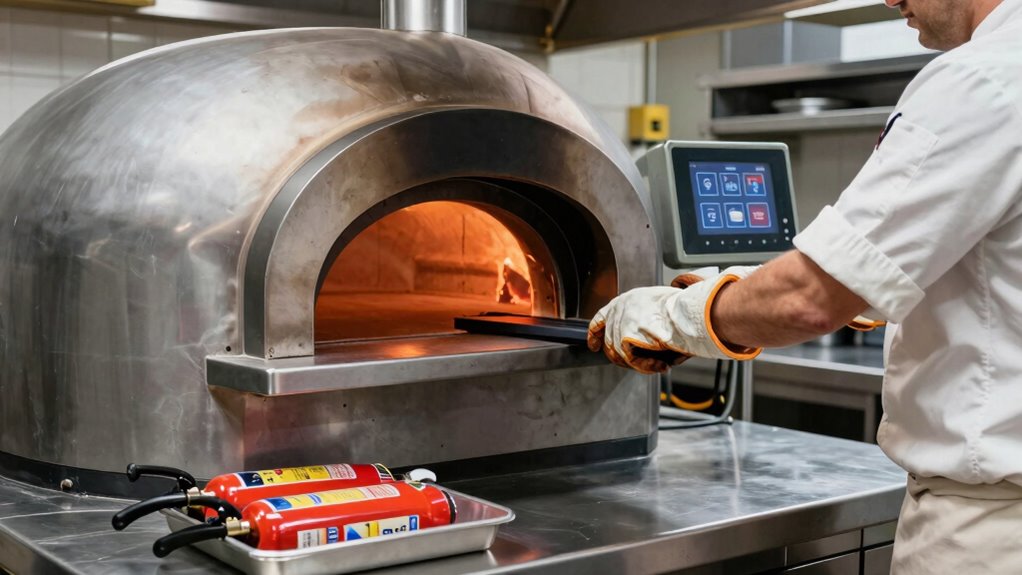
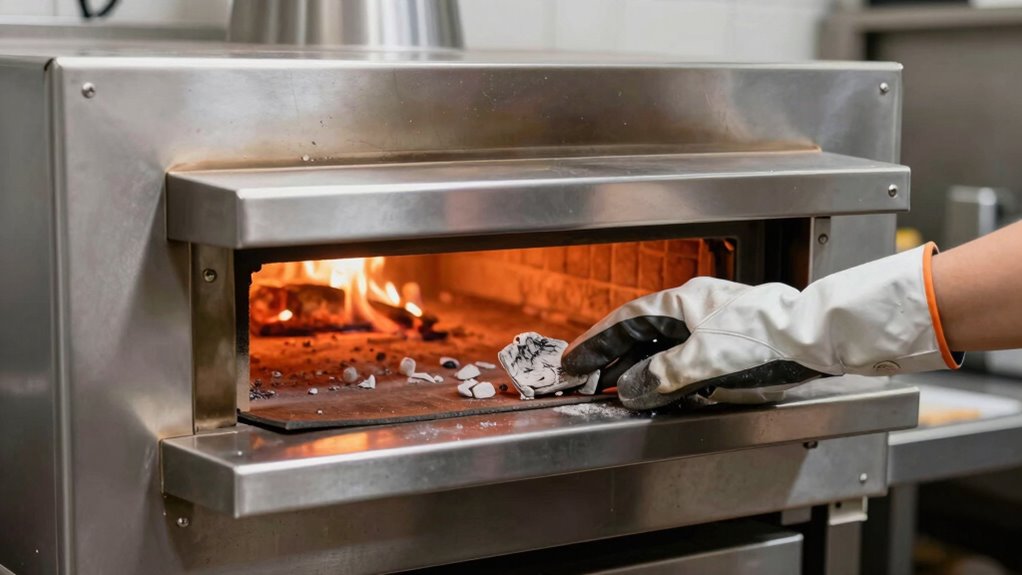
Shutting down a pizza oven safely is essential to prevent accidents and guarantee the equipment remains in good condition. When you’re ready to end your shift, it’s important to follow a structured routine that prioritizes safety and maintenance. Start by removing any residual food or debris from the oven surface and interior. This step is crucial because leftover food can burn and produce smoke or odors that compromise the oven’s performance. Once the oven is clean, focus on oven cleaning to guarantee the cooking chamber stays in excellent shape. Regular cleaning not only prolongs the lifespan of your equipment but also maintains food safety standards. Use appropriate cleaning agents and tools suited for pizza ovens, and avoid harsh abrasives that could damage the surfaces.
Removing debris and cleaning the oven ensures safety, preserves performance, and maintains food safety standards.
After cleaning, turn off the heat source according to the manufacturer’s instructions. If your oven has a gas supply, shut off the gas valve securely, and if it’s electric, switch off the power at the main breaker. With the heat source off, give the oven some time to cool down to a safe temperature. During this cooling period, it’s wise to check the oven’s temperature calibration. Accurate temperature calibration ensures that future cooking results are consistent and helps you identify if the oven needs adjustments or servicing. Proper calibration is essential because it prevents over- or under-cooking, which can damage ingredients or affect customer satisfaction. Additionally, understanding the importance of battery inverter capacity and how it influences performance can help in maintaining consistent operation, especially in backup scenarios. It’s also beneficial to review oven maintenance practices regularly to ensure longevity and safety. Being aware of the oven’s energy efficiency can further contribute to cost savings and environmental sustainability. Furthermore, paying attention to proper ventilation during shutdown can prevent the buildup of heat and fumes, enhancing safety. Incorporating monitoring systems can also assist in early detection of potential issues, ensuring ongoing safe operation.
Once the oven has cooled sufficiently, proceed to perform a final inspection. Check for any signs of wear, damage, or abnormal operation. This step helps catch potential issues early, reducing the risk of breakdowns or unsafe conditions. If your oven features digital controls or displays, verify that all settings are correctly reset and that safety features are engaged. Before leaving, ensure the oven’s ventilation is unobstructed and that the surrounding area is clean and clear of any combustible materials. Properly shutting down also involves securing the oven’s door or lid if applicable, to prevent accidental contact or contamination.
Finally, document the shutdown process if required by your facility’s protocols. Keeping a record of maintenance and shutdown routines helps monitor the oven’s condition over time. By following these steps—cleaning, turning off heat sources, calibrating the temperature, inspecting for issues, and securing the equipment—you guarantee your pizza oven remains safe, efficient, and ready for the next use. A consistent shutdown routine not only protects your staff but also extends the lifespan of the oven, saving you money and effort in the long run.

Hans Grill 2-in-1 Pizza Oven Brush & Scraper | Dual-Purpose Pizza Stone Brush Scraper with Stainless Steel Head | Outdoor Oven Cleaning Accessories, Stone Cleaner, Essential Cooking Tools.
EASY TO USE: Clean your pizza stone quickly and easily without soap or water using this 2-in-1 pizza…
As an affiliate, we earn on qualifying purchases.
As an affiliate, we earn on qualifying purchases.
Frequently Asked Questions
How Often Should I Perform Maintenance on My Pizza Oven?
You should perform maintenance on your pizza oven at least once a month. Follow a cleaning schedule to remove grease and debris, and use an inspection checklist to check for wear and tear, especially on the burners and insulation. Regular maintenance helps prevent breakdowns and guarantees safe operation. If your oven sees heavy use, consider more frequent checks. Staying proactive keeps your oven running smoothly and prolongs its lifespan.
What Are Common Signs of a Malfunctioning Pizza Oven?
Imagine slicing into a pizza, only to notice uneven crusts or inconsistent oven temperature. These signs often point to a malfunctioning pizza oven. You might see fluctuating heat levels, difficulty maintaining the desired temperature, or uneven cooking results. If your oven’s temperature isn’t stable or your crust consistency varies unexpectedly, it’s a clear sign you should inspect and possibly repair your oven to guarantee perfect pizzas every time.
Can I Leave the Oven Unattended During Shutdown?
You shouldn’t leave the oven unattended during shutdown. As you follow the shutdown checklist, make certain the oven insulation is intact and properly cooled before stepping away. Double-check that all controls are turned off and the power source is disconnected. Staying nearby allows you to monitor the process, prevent accidents, and ensure the oven cools safely, reducing fire risks or damage. Always prioritize safety during any shutdown procedure.
What Safety Gear Should I Wear During Shutdown?
During shutdown, you should wear protective gloves to prevent burns and eye protection to guard against potential splashes or sparks. These safety gears keep you safe from hot surfaces and any accidental splashes of cleaning chemicals. Always make sure your gloves are heat-resistant and your goggles fit snugly. Wearing the right safety gear minimizes risks, so take these precautions seriously and stay safe while handling the oven during shutdown.
How Long Does It Typically Take to Fully Cool Down?
It typically takes about 1 to 2 hours for a pizza oven to fully cool down after shutdown. Using effective cooling techniques, like leaving the door open slightly and avoiding rapid temperature drops, helps speed up the process. Follow proper shutdown procedures by turning off the heat gradually and monitoring the temperature. This guarantees safety and prevents damage, allowing the oven to cool safely before cleaning or maintenance.

TempPro TP30 Infrared Thermometer Gun, Laser Thermometer for Cooking, Pizza Oven, Griddle, Engine, HVAC, Temperature Gun with Adjustable Emissivity & Max Measure -58°F ~1022°F (Previously ThermoPro)
【Highly Accurate & Adjusts to Any Surface】Designed with the latest thermopile sensor technology, the infrared laser thermometer gun…
As an affiliate, we earn on qualifying purchases.
As an affiliate, we earn on qualifying purchases.
Conclusion
Remember, following a proper shutdown routine keeps you safe and extends your pizza oven’s lifespan. Always let it cool down completely before cleaning or storing, and never leave it unattended while hot. Did you know that improper shutdowns can cause oven malfunctions or accidents? In fact, over 30% of oven-related injuries happen due to neglecting safety steps. So, stay vigilant, follow the routine, and enjoy delicious, safely-made pizzas every time!

Thermocouple – Replacement for Bakers Pride Pizza Ovens FMEA Safety Kit
Thermocouple – Replacement for Bakers Pride Pizza Ovens FMEA Safety Kit 1980-060
As an affiliate, we earn on qualifying purchases.
As an affiliate, we earn on qualifying purchases.

Building a Wood-Fired Oven for Bread and Pizza (English Kitchen)
Used Book in Good Condition
As an affiliate, we earn on qualifying purchases.
As an affiliate, we earn on qualifying purchases.