
Understanding oven certifications and compliance standards helps you verify your appliance is safe, efficient, and reliable. Certification labels indicate that the oven has met strict safety, energy, and performance benchmarks set by organizations like UL, ETL, or ENERGY STAR. These verified standards protect you from hazards and reduce your energy costs. Knowing what these labels mean empowers you to choose quality appliances. Keep exploring to learn more about how these certifications impact your safety and savings.
Key Takeaways
- Certification labels verify that ovens meet safety, efficiency, and performance standards through independent testing.
- Safety certifications ensure protection against electrical hazards, overheating, and fire risks in ovens.
- Energy efficiency labels like ENERGY STAR indicate appliances designed to consume less power while maintaining performance.
- Recognized certifications confirm compliance with national and international safety and environmental standards.
- These standards help consumers make informed, safe, and environmentally conscious choices when purchasing ovens.
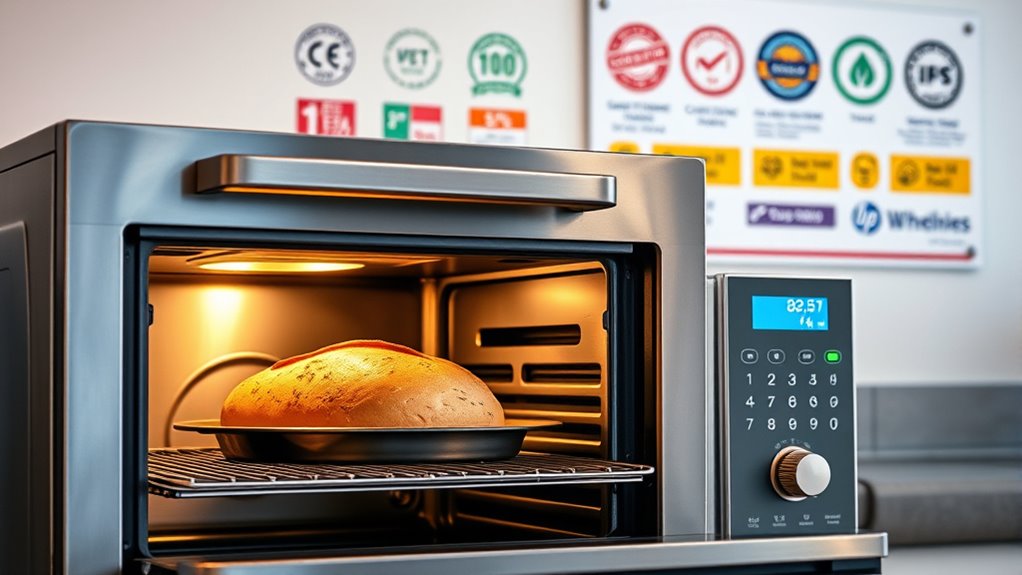
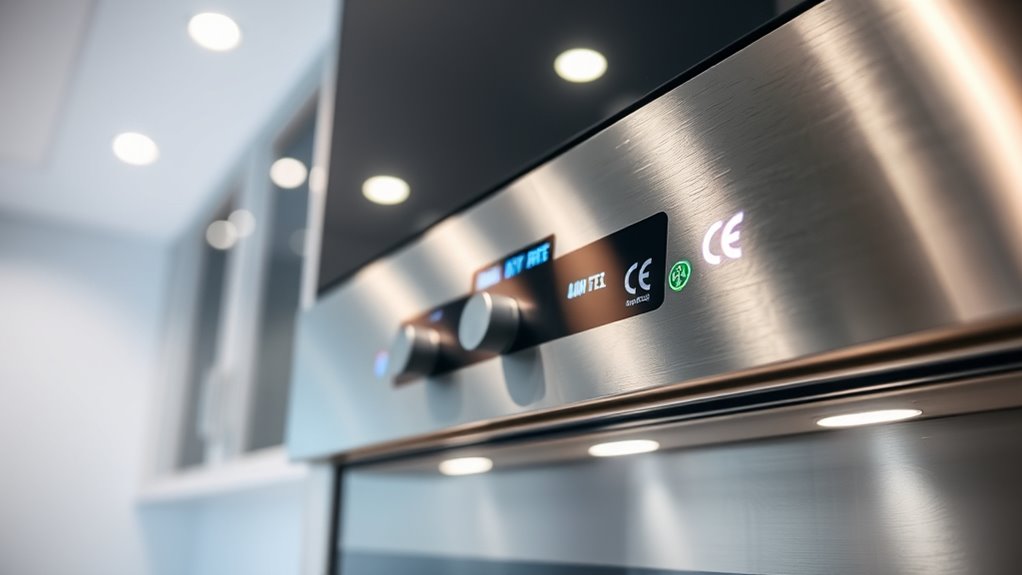
Have you ever wondered what those certification labels on ovens really mean? They’re not just random stickers; they represent important standards that guarantee your appliance is safe, efficient, and reliable. When shopping for a new oven, understanding these labels can help you make smarter decisions. One of the most critical aspects they indicate is safety standards. Manufacturers must meet rigorous safety protocols to obtain certification, which means the oven has been tested to prevent electrical hazards, overheating, and fire risks. These standards are in place to protect you and your family from potential accidents caused by faulty wiring, unstable materials, or design flaws. Certifications like UL (Underwriters Laboratories) or ETL (Intertek) confirm that the oven has undergone thorough testing by independent organizations, giving you peace of mind about its safety features.
In addition to safety, energy efficiency is a key factor that these labels often highlight. Modern ovens are designed to consume less power while still delivering ideal performance. When an oven bears an energy efficiency certification, it means the appliance adheres to specific guidelines that limit electricity consumption and reduce environmental impact. Energy-efficient ovens can save you money on utility bills over time and contribute to a greener lifestyle. Look for labels such as ENERGY STAR, which signify that the appliance meets strict energy-saving standards set by environmental agencies. These certifications often require manufacturers to incorporate advanced insulation, better heating elements, and intelligent controls that maximize energy use without sacrificing cooking quality.
Knowing what these certifications stand for helps you evaluate the quality of an oven before making a purchase. It’s not just about the brand or the features listed; it’s about trusting that the product complies with established safety and efficiency benchmarks. Certifications also indicate that the oven has been tested and inspected in accordance with national or international standards, making sure it won’t pose safety risks or waste unnecessary energy. When you see these labels, you can be confident that the appliance has been scrutinized for safety standards—reducing the chance of electrical fires or malfunctions—and for energy efficiency, helping you save money and protect the environment. Additionally, understanding that these certifications often include safety protocols ensures that the oven meets the necessary requirements to prevent hazards during everyday use.
Ultimately, understanding oven certifications empowers you to choose appliances that are both safe for your home and environmentally friendly. It’s worth taking a moment to check for these labels, as they serve as a guarantee that the oven meets essential safety and efficiency criteria. This knowledge not only helps you avoid potential hazards but also ensures your investment in a reliable, energy-conscious appliance that will serve you well for years to come.
Frequently Asked Questions
How Often Should Oven Certifications Be Renewed?
You should renew your oven certification every one to three years, depending on local regulations and the certification’s validity period. During the renewal process, make certain you meet all safety and compliance standards required by authorities. Staying on top of certification validity helps you avoid penalties and guarantees your oven remains compliant. Regular renewal also demonstrates your commitment to safety and quality, keeping your operations running smoothly without unexpected interruptions.
Are There Regional Differences in Oven Certification Standards?
You know what they say, “When in Rome, do as the Romans do.” Regional standards definitely influence oven certification differences. In the US, certifications focus on safety and energy efficiency, while Europe emphasizes environmental impact and emissions. These regional standards shape certification requirements, so you must guarantee your oven meets the specific standards of each region. Ignoring these differences can lead to compliance issues and potential market restrictions.
What Are Common Signs of Non-Compliance in Ovens?
You should watch for signs like unusual smoke, strange noises, or inconsistent heating, which indicate safety hazards. Damaged seals or exposed wiring also signal non-compliance. These issues compromise safety and quality assurance, risking accidents or food contamination. Regularly inspecting your oven for these signs helps guarantee it meets safety standards, protecting you and maintaining ideal performance. Addressing these problems promptly keeps your oven compliant and safe to use.
How Do Certifications Impact Oven Resale Value?
Think of certifications as a shining badge on your oven’s armor—proof of quality that boosts its resale value like a treasure gleaming in sunlight. When you sell, certified ovens attract more buyers because they trust the compliance impact, ensuring safety and efficiency. Without certification, your oven’s worth dims like a neglected jewel. So, securing proper certifications can turn your oven into a coveted prize, elevating its resale value effortlessly.
Can Uncertified Ovens Be Legally Sold or Used?
Uncertified ovens, or unapproved appliances, can often be legally sold or used, but it depends on local regulations. You should check your area’s rules because using or selling unapproved appliances might have legal implications, especially if they don’t meet safety standards. Always verify certification requirements before purchasing or installing to avoid potential fines or safety hazards. Staying compliant guarantees you’re protected from legal issues and safety risks.
Conclusion
By understanding oven certifications and compliance standards, you guarantee your appliance is safe, reliable, and meets legal requirements. It might seem complicated at first, but knowing these basics helps you make confident choices and avoid potential issues down the line. Imagine cooking with peace of mind, knowing your oven has passed all necessary standards. Taking the time to understand certifications is a smart investment in your safety and satisfaction in every meal you prepare.