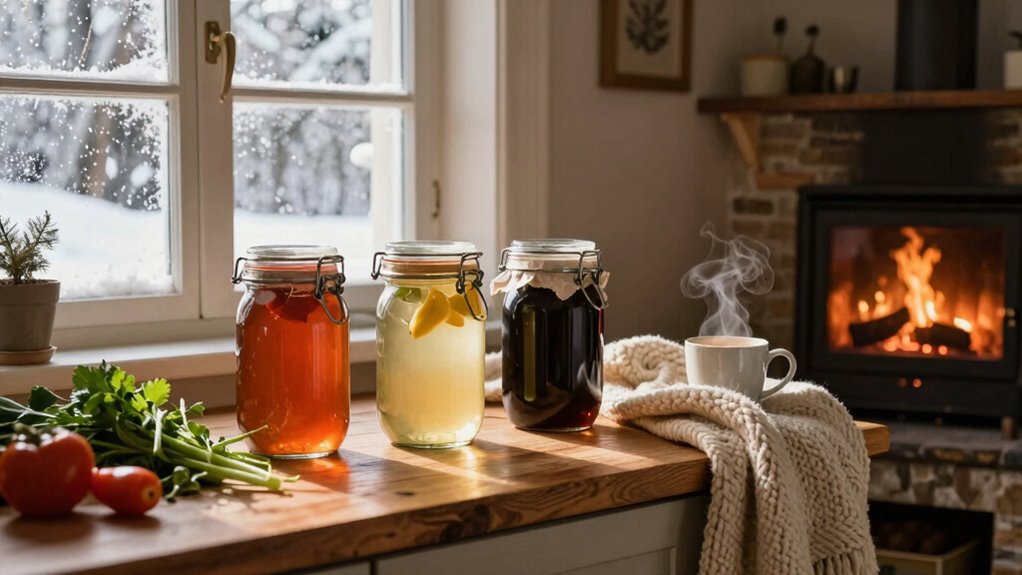

In summer, you should focus on controlling fermentation speed by managing higher temperatures with insulation or controlled chambers to prevent over-fermentation and off-flavors. In winter, extend fermentation time and use temperature control devices to keep microbial activity steady despite cooler temps. Adjust ingredients based on seasonal availability and microbial shifts. Staying attentive to temperature changes and making strategic adjustments guarantees you get consistent results year-round—there’s more to master as seasons shift.

Get baking supplies delivered free with Prime
- Fast, free delivery on millions of items
- Prime Video, Amazon Music and more included
- Member-only deals all year
Key Takeaways
- Adjust fermentation times to account for faster activity in summer and slower progress in winter.
- Use temperature control devices to maintain optimal microbial activity across seasonal temperature fluctuations.
- Modify ingredient moisture and sugar levels seasonally to support healthy fermentation environments.
- Monitor and manage microbial profiles, introducing specific starters if needed for seasonal microbial shifts.
- Implement insulation or heating methods in winter and cooling or ventilation in summer to stabilize fermentation conditions.
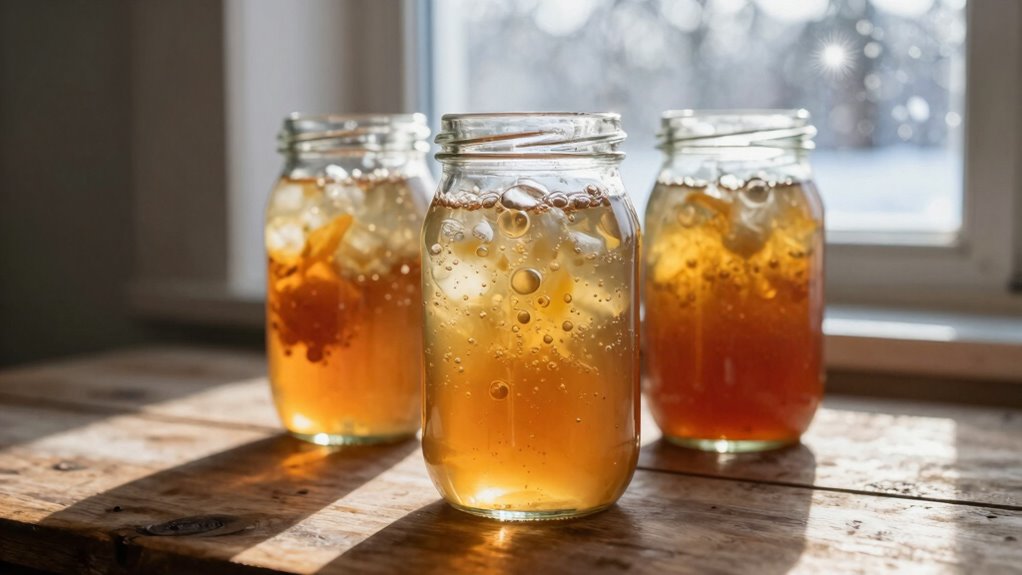
Fermentation processes can vary considerably between summer and winter, so understanding how seasonal changes affect fermentation is vital for successful results. As temperatures fluctuate outside, you need to adjust your approach to fermentation temperature control to keep your process consistent. In summer, higher ambient temperatures can accelerate fermentation, causing your cultures to become overly active. If you don’t monitor and manage this, you risk over-fermentation, which can lead to off-flavors or spoilage. On the other hand, winter’s chill slows down microbial activity, meaning fermentation might take much longer than usual or stall altogether. To keep things on track, you’ll want to find ways to maintain stable temperatures—using insulation, heating mats, or controlled fermentation chambers—so your process isn’t at the mercy of the weather.
Seasonal ingredient variations also play a significant role in how you approach fermentation. During summer, fresh, local produce is often abundant and at its peak flavor, which can enhance the final product. However, the moisture content and sugar levels of summer ingredients may differ from winter varieties, influencing fermentation dynamics. For example, summer fruits tend to be more watery and sweeter, which can speed up fermentation or cause it to become too vigorous if not carefully managed. Conversely, winter ingredients might be drier or less ripe, requiring adjustments such as adding water or sugar to ensure a healthy fermentation environment. You’ll need to adapt your recipes and ingredient sourcing based on what’s available, keeping in mind that seasonal ingredient variations impact both fermentation time and flavor development. Additionally, microbial profiles can change with seasonal storage conditions, affecting fermentation outcomes. In winter, you might also notice that certain ingredients have different microbial profiles due to storage conditions or seasonal growth patterns. This can influence the flavor and consistency of your ferments. To compensate, you may need to introduce specific starters or adjust fermentation times to achieve the desired results. Additionally, winter’s lower temperatures can mean you need to extend fermentation periods or employ temperature control devices to keep microbes active without risking spoilage. Summer, with its abundance of fresh ingredients, offers a different set of challenges—mainly managing rapid fermentation and preventing unwanted microbial growth. Being aware of seasonal microbial variation helps in selecting the right starters or adjusting fermentation conditions. Recognizing the impact of temperature on microbial activity is essential for maintaining consistent fermentation results throughout the year. In both seasons, understanding these factors helps you fine-tune your process, ensuring consistent, high-quality ferments regardless of the time of year.
fermentation temperature control chamber
As an affiliate, we earn on qualifying purchases.
As an affiliate, we earn on qualifying purchases.
Frequently Asked Questions
How Does Humidity Affect Fermentation in Different Seasons?
Humidity variations considerably impact fermentation across seasons. In summer, higher seasonal moisture speeds up fermentation, risking over-fermentation or spoilage if you don’t monitor closely. During winter, lower humidity slows down the process, requiring longer fermentation times or adjustments. By understanding these seasonal moisture changes, you can tweak temperature and airflow to maintain ideal fermentation conditions, ensuring consistent results year-round despite humidity fluctuations.
Are Certain Fermentation Tools Better for Summer or Winter?
Think of your fermentation tools as seasonal wardrobe choices—some are better suited for summer’s heat, others for winter’s chill. For seasonal climate adaptation, choose fermentation vessels with good insulation or breathable covers. Glass jars work well year-round, but in winter, consider ceramic or wooden vessels to maintain steady temperatures. In summer, lighter materials prevent overheating. Matching your vessel selection to the season keeps your fermenting journey smooth and successful.
How Do Seasonal Changes Impact Fermentation Times?
Seasonal changes considerably impact fermentation times by affecting temperature and humidity. In summer, warmer temperatures speed up fermentation, leading to quicker flavor development, so you should monitor your fermenting foods closely. In winter, cooler conditions slow down the process, allowing flavors to develop more gradually. Adjust your seasonal timing accordingly, knowing that fermentation flavor will evolve differently depending on the time of year, so be patient or attentive as needed.
Can Temperature Fluctuations During Storage Affect Fermentation Results?
Think of fermentation like baking bread—you need consistent warmth. Temperature fluctuations during storage can disrupt fermentation, causing inconsistent results. Just last winter, I stored kimchi in a fluctuating cellar, and it turned out uneven. Maintaining temperature stability helps guarantee fermentation consistency, preventing spoilage or irregular flavors. To achieve this, keep your fermenting goods in a cool, steady environment, especially during seasonal changes, so the process remains predictable and successful.
What Are Signs of Fermentation Failure in Different Seasons?
If your fermentation fails, you’ll notice signs like off-smells, mold, or slimy textures, which threaten fermentation safety. In summer, excessive heat accelerates fermentation, risking overproduction of sour flavors or spoilage, while cold winter temperatures can halt the process, leading to incomplete fermentation. Proper temperature control guarantees consistent flavor development and safety across seasons. Always monitor your ferment for these signs, adjusting conditions as needed to prevent failure.
As an affiliate, we earn on qualifying purchases.
Conclusion
Remember, adjusting your fermentation approach with the seasons can lead to better results. In summer, higher temperatures speed up fermentation, so you might need to ferment shorter or cooler to prevent overdoing it. In winter, cooler temps slow things down, giving you more control and flavor development. Did you know that fermentation rates can vary by up to 50% with just a 10°C difference? Embrace seasonal changes, and you’ll enjoy consistently delicious, perfectly fermented foods year-round.
digital fermentation temperature controller
As an affiliate, we earn on qualifying purchases.
As an affiliate, we earn on qualifying purchases.
fermentation starter culture kit
As an affiliate, we earn on qualifying purchases.
As an affiliate, we earn on qualifying purchases.
Fall Picks
fall essentials
As an affiliate, we earn on qualifying purchases.