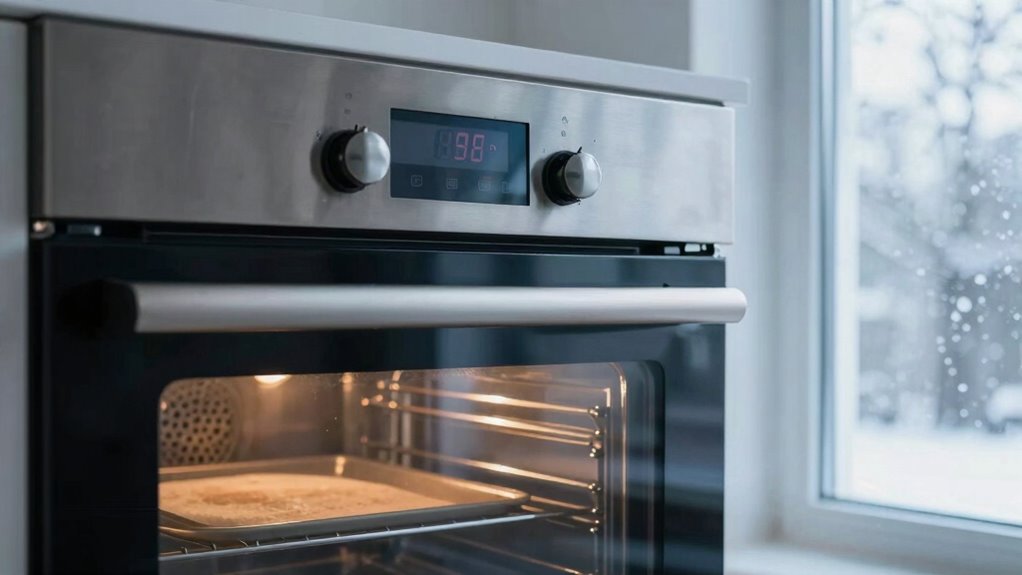

During winter, cold outdoor air and chilly indoor temperatures slow down your oven’s recovery time between pizzas. Opening the oven in freezing conditions causes more heat loss, and poor insulation makes it harder for your oven to regain the right temperature. Keeping your kitchen warmer and improving insulation helps your oven recover faster and maintain consistent baking results. Want to discover simple ways to optimize your winter baking performance? Keep exploring for helpful tips.

Get baking supplies delivered free with Prime
- Fast, free delivery on millions of items
- Prime Video, Amazon Music and more included
- Member-only deals all year
Key Takeaways
- Cold outdoor air slows oven heat recovery, increasing the time between pizzas in winter.
- Poor indoor insulation causes faster heat loss, prolonging recovery times after door openings.
- Lower indoor temperatures accelerate oven cooling, requiring more time to reheat to optimal baking temps.
- Efficient insulation and warmer indoor environments help maintain consistent recovery times during winter.
- Longer recovery periods can lead to uneven baking and delays between pizza batches in cold weather.
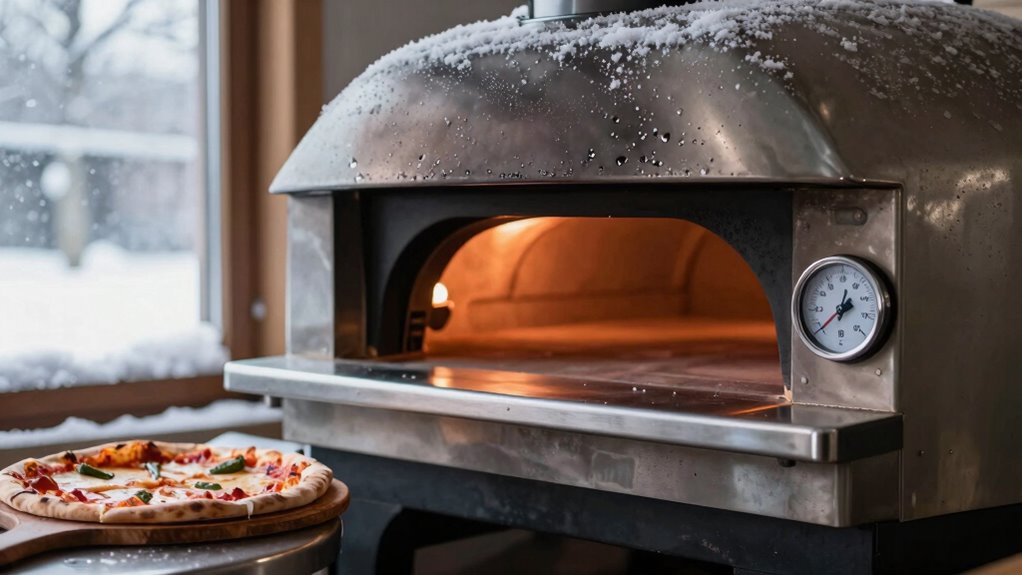
During winter, colder ambient temperatures can considerably impact how quickly your oven recovers heat between baking pizzas. When the outdoor air is chilly, it influences the indoor temperature, which in turn affects your oven’s ability to bounce back to the desired cooking heat. If your indoor space isn’t well-heated or insulated, the oven’s temperature can drop more quickly once the door opens, making it harder to maintain consistent baking conditions. This means your oven needs extra time to recover from each pizza, potentially leading to uneven cooking or longer wait times between batches.
Colder winter air slows oven recovery, causing longer bake times and uneven cooking. Proper insulation and indoor warmth help maintain consistent temperatures.
A key factor in this process is oven insulation. Good insulation helps trap the heat generated inside, preventing it from escaping easily when you open the door or during the cooling phase. During winter, if your oven isn’t properly insulated, the heat loss is more pronounced, and the oven has to work harder and longer to reach the right temperature again. Poor insulation can cause the internal temperature to plummet faster, especially if your kitchen or baking area is cold, which is common during winter months. Proper insulation can significantly reduce heat loss and improve recovery times, especially in colder conditions. Additionally, insulation quality directly impacts how well your oven maintains heat during these colder months.
Indoor temperature plays an essential role. If your home or kitchen stays chilly, the oven’s internal temperature will start to decline more rapidly once you open it. This is because the heat differential between the oven’s interior and the surrounding environment increases. When the ambient temperature drops, the oven’s heating elements must compensate for the heat lost to the colder air, extending the recovery time. Ensuring a warmer indoor environment, either through central heating or localized space heaters, helps minimize this effect and keeps your oven’s recovery time shorter. Furthermore, temperature regulation is crucial for consistent baking results during winter, as fluctuations can further prolong recovery times.
The thermal conductivity of your oven’s materials influences how quickly it loses or retains heat, which becomes more critical in winter conditions. Furthermore, the overall efficiency of your oven’s insulation system becomes even more vital in winter. If your oven is well-insulated, it retains heat better, reducing the time needed to reach ideal baking temperatures after each pizza. Conversely, a poorly insulated oven will struggle more in winter, leading to longer wait times and inconsistent results. You might notice that during colder months, your baking sessions take longer and require more attention to temperature adjustments. Proper maintenance and insulation upgrades can help mitigate these issues during winter months.
As an affiliate, we earn on qualifying purchases.
Frequently Asked Questions
Does Outdoor Winter Temperature Affect Indoor Oven Recovery Times?
Yes, outdoor winter temperatures can affect indoor oven recovery times. Cold weather causes heat to escape more quickly, especially if your indoor insulation or oven insulation isn’t ideal. You might notice longer recovery times because your oven works harder to reach and maintain the right temperature. To minimize this, make sure your indoor insulation is effective, and consider adding extra oven insulation to keep the heat contained and improve recovery times.
How Does Winter Humidity Influence Oven Preheating?
Winter humidity impact can surprise you, as it slows down oven preheating more than you’d expect. High humidity causes moisture to seep into oven insulation, making it harder for heat to build up efficiently. You might notice longer preheating times and uneven heat distribution, especially if your oven isn’t well-insulated. Keep an eye on humidity levels, and consider better insulation to guarantee consistent, quick preheat, even in damp winter conditions.
Are There Specific Oven Types More Affected by Winter Conditions?
You’ll find that ovens with better insulation are less affected by winter conditions since they maintain temperature stability more effectively. Conventional or poorly insulated ovens lose heat faster in cold weather, increasing recovery time between pizzas. To keep your oven performing at its best, make sure it’s well-insulated and consider adjusting your preheating process during winter months. This helps maintain consistent baking temperatures and improves overall pizza quality.
Should I Adjust Cooking Times During Winter Months?
Yes, you should adjust cooking times during winter months. Colder outdoor temperatures can affect your oven’s insulation, making it take longer to reach and maintain the right temperature. As a result, your pizza toppings might cook unevenly if you don’t compensate. To guarantee perfect results, consider slightly increasing cooking times and checking your oven’s insulation, especially if you’re using thicker toppings or specialty crusts.
How Can I Optimize Oven Performance in Cold Weather?
To optimize oven performance in cold weather, guarantee your oven has proper insulation to retain heat effectively. Regularly check and calibrate the temperature to maintain consistent cooking conditions. Keep the oven door closed as much as possible during operation to prevent heat loss. Additionally, preheat the oven adequately before baking and consider using a thermal blanket or insulation wrap to enhance heat retention, ensuring your pizzas cook evenly every time.
As an affiliate, we earn on qualifying purchases.
Conclusion
During winter, your oven takes longer to recover between pizzas due to colder ambient temperatures, which absorb heat and slow down reheating. For example, imagine you’re running a small pizzeria; on a chilly night, you notice your oven needs extra time to reach ideal baking temperature after each pie. By understanding this, you can adjust your schedule or preheat more thoroughly, ensuring your pizzas come out perfect every time, no matter the season.
As an affiliate, we earn on qualifying purchases.
As an affiliate, we earn on qualifying purchases.
Halloween Picks
halloween
As an affiliate, we earn on qualifying purchases.