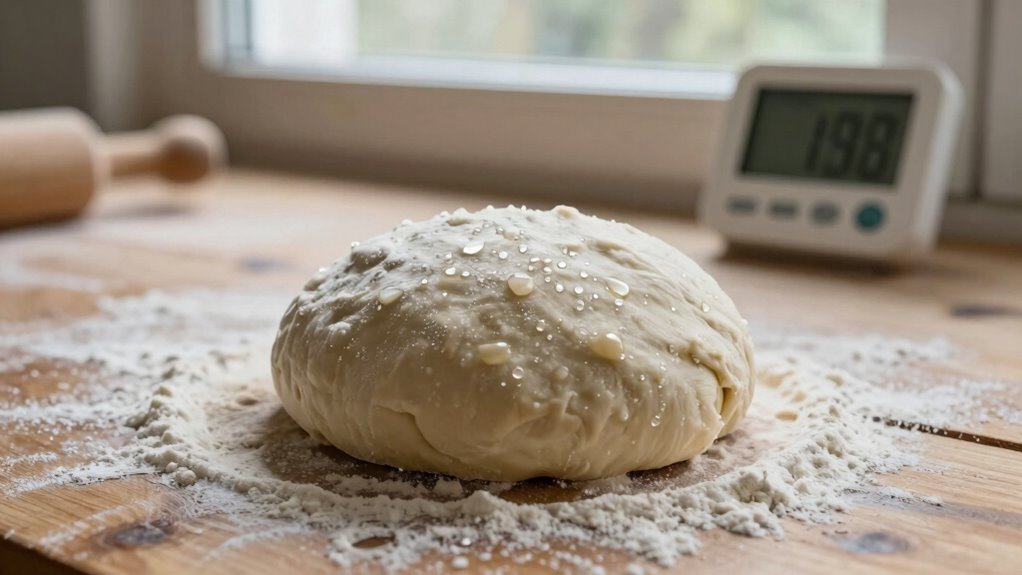

During summer, high humidity introduces extra moisture into the air, which weakens gluten strands and makes dough more sticky or dense. This disrupts gluten development and affects how the dough handles, often making it less elastic and harder to shape. You might notice your usual flour-to-water ratios no longer work easily. By understanding how humidity impacts dough, you can make simple adjustments to improve your baking results—I’ll show you how to master this tricky weather.

Get baking supplies delivered free with Prime
- Fast, free delivery on millions of items
- Prime Video, Amazon Music and more included
- Member-only deals all year
Key Takeaways
- High summer humidity increases moisture absorption, weakening gluten structure and reducing dough elasticity.
- Excess moisture causes dough to become overly sticky and difficult to handle.
- Standard water-to-flour ratios may lead to over-hydrated dough during humid conditions.
- Humidity disrupts gluten development, resulting in denser, less elastic baked goods.
- Controlling environment and adjusting ingredients helps maintain consistent dough performance.
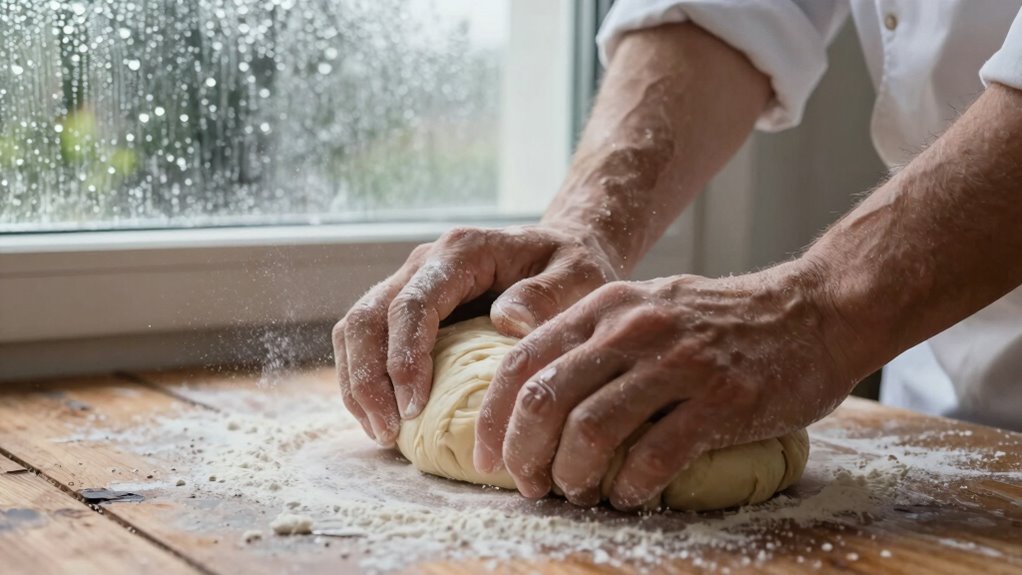
When summer humidity rises, it can unexpectedly throw off your usual dough formula, making your baked goods turn out less than perfect. One of the main issues you’ll notice is how the effects on gluten development change. Humidity introduces extra moisture into the dough, which can make the gluten strands less structured. Instead of a strong, elastic dough that stretches easily, you might find it overly sticky or weak. This is because excess water in the air causes the flour to absorb more moisture than usual, disrupting the balance of ingredients you rely on. As a result, your dough may not develop the necessary gluten network, leading to a denser texture or poor rise. You may also notice that it’s harder to knead or shape, as the dough doesn’t hold together as well. To counteract this, you might need to adjust your flour-to-water ratio, using slightly less water or flour to compensate for the extra humidity. Additionally, understanding how humidity impacts gluten development can help you adapt your baking process more effectively during humid summer days. Being aware of these environmental factors allows bakers to fine-tune their recipes and techniques for more consistent results. Recognizing the influence of humidity levels on dough consistency can also help prevent over- or under-hydration issues in your baked goods. Incorporating knowledge of climate effects can further improve your baking outcomes in the summer months. Moreover, using proper indoor air quality tools to control humidity levels can help maintain a stable environment for baking.
Products Worth Considering

Le Creuset Heritage Stoneware Rectangular Baking Dish Set, 3-Piece, Marseille

Ninja UltraCrush Pro Kitchen System, 1500W, Silver, BP401

Vitamix VX3 Professional-Grade Blender with BlendPilot, 48 oz, Black
As an affiliate, we earn on qualifying purchases.
Frequently Asked Questions
How Does Humidity Affect Yeast Activation?
Humidity levels directly influence yeast activity because moisture in the air affects how yeast ferments. When it’s humid, the extra moisture can speed up yeast activation, leading to faster rising times. Conversely, low humidity can slow down yeast activity, making dough take longer to rise. You should adjust your recipe or proofing times based on the humidity to guarantee your dough develops properly and bakes perfectly.
Can Humidity Change the Dough’s Rising Time?
Yes, humidity can change your dough’s rising time. Climate influence affects how quickly yeast activates and how moisture interacts with your ingredients. In humid conditions, your dough may rise faster due to added moisture, while in dry climates, it may take longer. To maintain consistent results, you should make recipe adjustments—like tweaking water amounts or proofing times—to account for seasonal humidity fluctuations.
Is It Necessary to Adjust Salt Levels in Summer?
Imagine a baker in Victorian times adjusting her secret recipe—yes, you should tweak salt levels in summer. Humidity alters dough’s behavior, so seasonal ingredient adjustments become essential. You might need slightly less salt, as high moisture can intensify flavor. Use air circulation techniques like fans or open windows to control humidity, helping you maintain consistent dough quality. This guarantees your bread rises perfectly, season after season.
How Can I Tell if My Dough Is Too Sticky?
You can tell if your dough is too sticky by feeling its texture; it should be slightly tacky but not overly wet or clingy. If it sticks excessively to your hands or the work surface, it likely has too much dough stickiness caused by high humidity affecting flour absorption. To fix this, sprinkle a little more flour and knead it in gradually until the dough reaches the right consistency.
Does Humidity Impact Gluten Development?
Yes, humidity effects can impact gluten development in your dough. High humidity introduces more moisture, making the dough stickier and altering its consistency. This extra moisture can weaken gluten strands, resulting in a less elastic dough that’s harder to shape and rise properly. To counteract this, you may need to adjust your flour or water ratios, ensuring your dough maintains the right consistency despite changes in humidity.
Conclusion
As summer humidity dances through the air, it whispers secrets to your dough, subtly shifting its balance. Like a delicate sail caught in shifting winds, your perfect recipe can veer off course if you don’t adjust. Embrace the changing climate as a guide, not a foe. With a steady hand and mindful touch, you’ll steer your dough back to harmony—transforming each batch into a masterpiece that rises true, no matter how the weather sways.