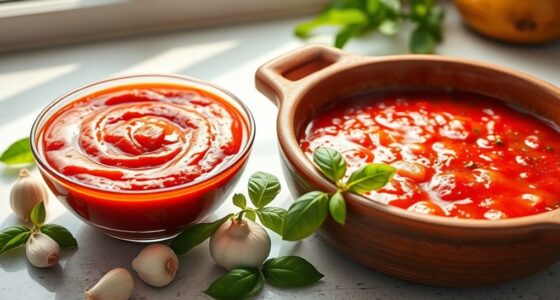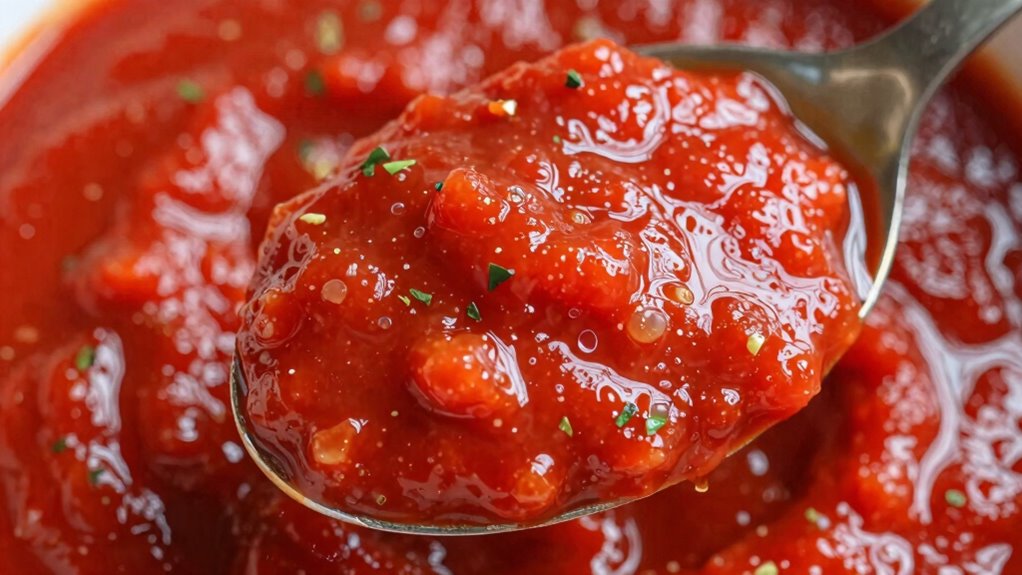

Bright pizza sauces come from using fresh herbs added at the right time, like toward the end of cooking, which preserves their vibrant flavors. Overcooking or adding dried herbs early can mute their brightness, making the sauce taste flat. Properly balancing seasonings, incorporating a splash of vinegar or lemon for a lively touch, and using fresh ingredients also boost flavor. To master these techniques and keep your sauce lively, discover more tips ahead.

Get baking supplies delivered free — and shop member deals
- Fast, free delivery on millions of items
- Access to Prime Big Deal Days deals on October 6–7
- Prime Video, Amazon Music and more included
Key Takeaways
- Fresh herbs added late preserve their vibrant, bright flavors, unlike dried herbs which can dull over time.
- Proper herb storage maintains freshness, ensuring the sauce retains its lively, bright taste.
- Balancing acidity with vinegar or lemon juice enhances brightness and prevents the sauce from tasting flat.
- Gentle simmering and avoiding overcooking preserve delicate herb flavors, maintaining sauce brightness.
- Combining fresh herbs for vibrancy and dried herbs for depth creates a lively, well-rounded flavor profile.
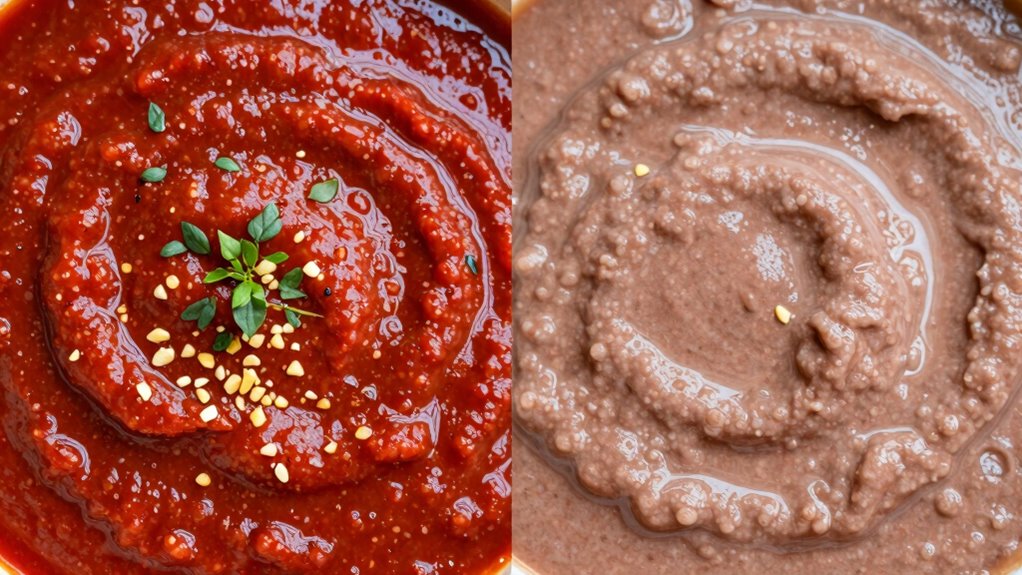
Have you ever wondered why some pizza sauces burst with vibrant, fresh flavors while others taste dull or flat? The difference often lies in the herb variations used and the cooking techniques employed during preparation. When you choose herbs like basil, oregano, thyme, or parsley, you’re adding layers of aroma and taste that can elevate a simple sauce to something extraordinary. Fresh herbs tend to deliver a brighter, more vibrant flavor profile, especially if added towards the end of the cooking process or even after cooking. Dried herbs, on the other hand, can sometimes add depth but might also mute the freshness if used excessively or added too early, losing their potency over time.
Your choice of herbs directly influences the brightness of your sauce. For example, fresh basil provides a sweet, slightly peppery note that awakens the palate, while oregano offers a hearty, earthy tone that gives your sauce a more robust character. Combining different herb variations allows you to balance these flavors, creating a sauce that’s lively rather than flat. But herbs alone aren’t enough—you need to master the right cooking techniques. Sautéing garlic and onions before adding tomatoes helps release their flavors, creating a fragrant base. Simmering the sauce gently allows the herbs and ingredients to meld without losing their brightness. Overcooking or boiling at high heat can dull the flavors, making the sauce taste muted or even bitter. Proper cooking methods can preserve the delicate nuances of herbs and enhance overall flavor. Additionally, understanding how herb flavor compounds react during cooking can help you better preserve their brightness and avoid dullness.
Another technique that impacts flavor is the timing of adding herbs. Fresh herbs added early during simmering tend to lose their delicate nuances, while adding them at the end preserves their vibrant notes. If you want a sauce that truly pops with flavor, consider tasting and adjusting the seasoning as you go. Use a combination of fresh herbs for brightness and dried herbs for depth. Additionally, proper herb storage methods can also ensure their freshness and potency, making your sauce taste more lively. Paying attention to seasoning balance can make a significant difference in achieving that bright, vibrant taste. Furthermore, incorporating a bit of acid, like a splash of vinegar or lemon juice, can brighten the overall flavor, complementing the herbs and preventing the sauce from tasting flat.
As an affiliate, we earn on qualifying purchases.
Frequently Asked Questions
How Does the Type of Tomatoes Affect Sauce Brightness?
The type of tomatoes considerably impacts sauce brightness because ripeness affects their natural acidity and sweetness. Riper tomatoes tend to be more vibrant, giving your sauce a brighter flavor. Additionally, the tomato variety influences the depth of flavor; some have a tangier or sweeter profile. Proper sauce seasoning enhances this brightness, balancing acidity and sweetness for a lively, fresh-tasting pizza sauce.
What Role Does Acidity Play in Pizza Sauce Flavor?
Acidity plays a key role in balancing the flavor of your pizza sauce. It adds brightness, making the sauce taste lively and fresh, while too much can make it overly sharp or sour. You should aim for a good flavor balance by adjusting acidity levels with fresh ingredients and, if needed, a splash of vinegar or lemon juice. Fresh ingredients enhance natural acidity, ensuring your sauce tastes vibrant rather than flat.
Can Cooking Methods Influence Sauce Brightness?
Did you know that simmering pizza sauce for just 20 minutes can boost its brightness? Cooking techniques, like quick simmering or roasting, substantially influence flavor enhancement and brightness. High heat can concentrate flavors and add a subtle caramelization, making the sauce taste more vibrant. Conversely, overcooking can dull the freshness. So, choose your cooking method carefully to preserve or enhance the sauce’s lively, bright qualities.
How Do Preservatives Impact the Taste of Pizza Sauce?
Preservatives can impact the taste of your pizza sauce by affecting its flavor profile. They may dull bright, fresh flavors, leading to a flatter taste, or sometimes enhance certain aspects by preventing spoilage. While preservatives aim to extend shelf life, they can also cause flavor changes through preservative effects. If you want a more vibrant sauce, look for preservative-free options or make your own, so you control flavor enhancement and avoid unwanted taste alterations.
Are There Regional Differences in Pizza Sauce Recipes?
Yes, regional differences influence pizza sauce recipes, reflecting local flavors and ingredient variations. For example, New York-style sauces often feature a simple, garlicky tomato base, while Chicago-style sauces might be richer and more seasoned with herbs. You’ll notice these regional flavor differences because local ingredients and culinary traditions shape the sauce’s taste. So, depending on where you are, the sauce can vary markedly, giving each pizza a unique character.
pizza sauce herb storage containers
As an affiliate, we earn on qualifying purchases.
As an affiliate, we earn on qualifying purchases.
Conclusion
So next time you bite into a slice, notice how the sauce makes you feel—bright and lively or flat and dull. It’s all about the balance of acidity, sweetness, and fresh ingredients. Do you want your pizza to awaken your taste buds or leave them craving more? With a little knowledge, you can pick or make a sauce that perfectly matches your mood. After all, isn’t pizza all about elevating your experience?
As an affiliate, we earn on qualifying purchases.
As an affiliate, we earn on qualifying purchases.
Fall Picks
fall essentials
As an affiliate, we earn on qualifying purchases.