
Your dough’s texture can shift from silky to sticky due to small changes in fermentation, ingredient quality, or environment. Faster fermentation in warm, humid conditions weakens gluten, making dough stickier. Using slightly too much water or poorly stored flour can also affect feel. Consistent temperature and hydration control are key, but even minor adjustments can cause noticeable differences. If you want to understand how to keep your dough consistently silky, keep exploring these factors more closely.
Key Takeaways
- Variations in fermentation timing can alter gluten development, affecting dough’s silkiness or stickiness.
- Changes in hydration levels or ingredient quality can impact dough texture unpredictably.
- Fluctuations in environmental temperature and humidity influence fermentation speed and moisture content.
- Over- or under-fermentation weakens gluten, leading to sticky or less elastic dough.
- Inconsistent ingredient freshness or storage conditions can cause texture differences from day to day.
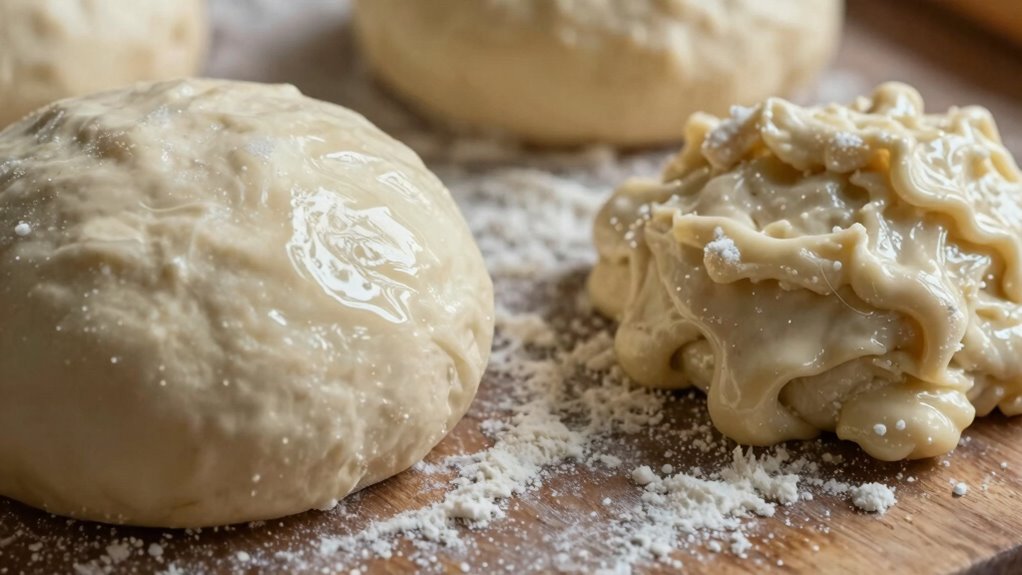
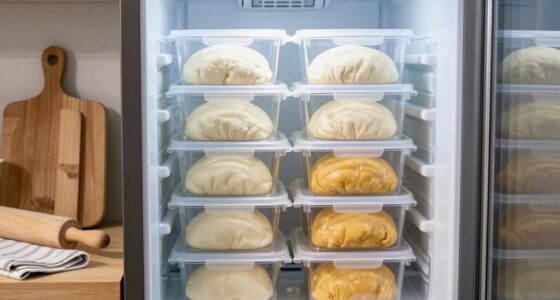
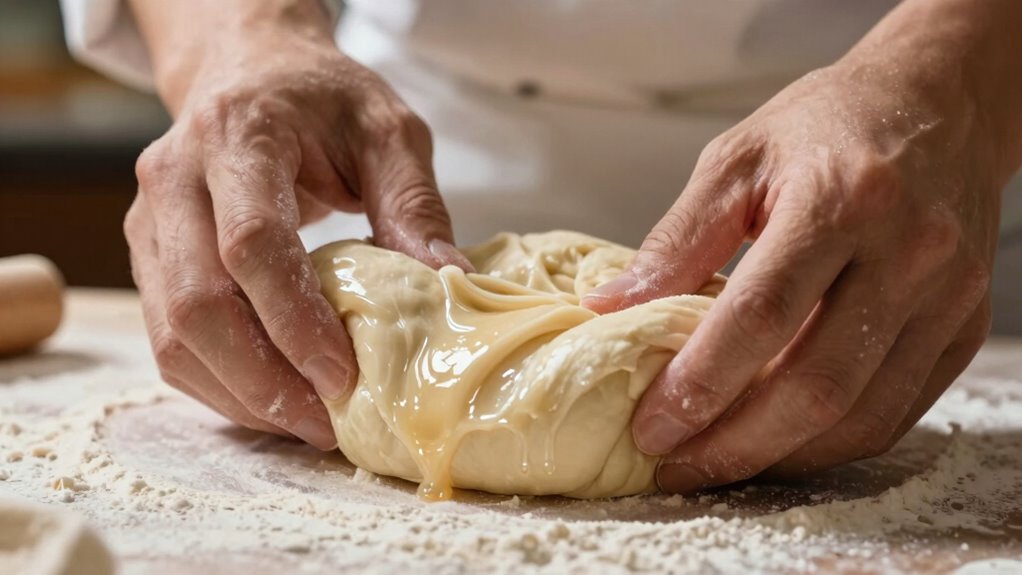
Dough can feel silky one day and sticky the next, leaving many bakers puzzled about what causes this inconsistency. The answer often lies in the fermentation process and ingredient quality. When you’re working with dough, the fermentation process plays an essential role in its texture. During fermentation, yeast consumes sugars, producing carbon dioxide that helps the dough rise and develop structure. If fermentation happens too quickly or too slowly, it can alter the dough’s consistency, making it feel silky or sticky at different times. For example, over-fermentation can weaken gluten networks, resulting in a stickier, less manageable dough. Conversely, under-fermentation might leave the dough dense and less elastic, affecting how it feels when you handle it. Additionally, the fermentation timing influences how the dough’s texture develops, so careful monitoring can help achieve a more consistent feel. Ingredient quality is another key factor influencing dough texture. The type and freshness of ingredients you use directly impact the fermentation process and how the dough develops. High-quality flour with the right protein content helps create a strong gluten network, giving your dough a silky, smooth feel. On the other hand, using lower-quality flour or flour that has been stored improperly can introduce moisture or stale flavors, leading to an unpredictable, sticky consistency. Similarly, the hydration level—how much water you add—must be balanced with the flour’s absorption capacity. Too much water can make dough overly sticky, while too little can make it dry and tough. The freshness of your yeast and other ingredients also affects fermentation; stale yeast may not produce enough gas, resulting in dough that doesn’t rise properly and feels different each time. Temperature and humidity in your kitchen also influence both fermentation and ingredient behavior. Warmer environments speed up fermentation, which can cause dough to become sticky if it over-proofs. Cooler conditions slow fermentation, possibly leading to a tighter, silkier dough. Humidity affects moisture levels in your ingredients and dough, making it necessary to adjust hydration accordingly. Even minor changes in these environmental factors can cause your dough to shift from silky to sticky.

Superbaking Multipurpose Dough Scraper – 6" Bench Scraper & Dough Cutter with Ruler – Pastry & Cake Scraper – Kitchen Tool for Baking, Bread Making & Sourdough, Wooden Handle
VERSATILE FOOD SCRAPER: Use this 6-inch food scraper to divide dough, transfer ingredients, or as a cake tool….
As an affiliate, we earn on qualifying purchases.
As an affiliate, we earn on qualifying purchases.
Frequently Asked Questions
Can Environmental Humidity Affect Dough Consistency?
Yes, environmental humidity impacts dough consistency. High humidity adds moisture, making your dough stickier and softer, while low humidity causes it to dry out and become firmer. To maintain the moisture balance, you should adjust your measurements of water or flour accordingly. Keep an eye on the humidity impact, and tweak your ingredients slightly to guarantee your dough stays silky and manageable, regardless of the weather conditions.
Does Using Different Types of Flour Change Dough Texture?
Using different types of flour definitely changes dough texture because of variations in flour protein and gluten development. High-protein flours, like bread flour, create stronger gluten networks, making dough elastic and sturdy. Low-protein flours, like cake or pastry flour, develop less gluten, resulting in softer, more tender dough. Understanding these differences helps you achieve the desired dough consistency—whether silky smooth or sticky—by selecting the right flour for your baking needs.
How Does Kneading Time Influence Dough Stickiness?
Kneading time directly influences dough stickiness through gluten development and fermentation effects. When you knead longer, gluten strands strengthen, making the dough more elastic and less sticky. Shorter kneading leaves gluten less developed, making the dough stickier. Fermentation also plays a role; as it progresses, enzymes break down proteins, affecting stickiness. Adjust your kneading based on desired dough texture, balancing gluten development and fermentation effects.
Can Adding Extra Water Improve Dough Silkiness?
Adding extra water can improve dough silkiness by enhancing gluten development and balancing hydration. When you increase hydration, the dough becomes more elastic and smooth, making it feel silkier. Just make certain you add water gradually, as too much can make it sticky. Proper hydration helps develop the gluten network, resulting in a softer, more manageable dough that feels silky and resists stickiness, especially after kneading.
Is Temperature a Factor in Dough Texture Variations?
Temperature is a key player in dough texture variations, acting like a silent conductor. When it’s too warm or cold, it hampers gluten development and reduces dough elasticity, making it feel sticky or dry. Warmer temperatures speed up gluten formation, creating a silky feel, while cooler conditions slow it down, leading to a stickier dough. Maintaining consistent temperature guarantees your dough develops the perfect elasticity and smoothness every time.

TempPro TempSwift 1 Sec Digital Food Thermometer for Kitchen Cooking
Fast and Accurate Reading: Kitchen thermometer for cooking features a 1 second readout speed and high accuracy of…
As an affiliate, we earn on qualifying purchases.
As an affiliate, we earn on qualifying purchases.
Conclusion
So, don’t get discouraged when your dough’s mood swings. Remember, it’s normal for dough to feel silky one day and sticky the next—it’s all part of the process. Instead of stressing, trust your instincts and adjust as needed. Baking is about patience and learning. Even if your dough feels unpredictable, keep experimenting. The perfect loaf is worth the effort, and each bake brings you closer to mastering the art.

King Arthur 100% Organic Bread Flour, Unbleached, 5 lb (Pack of 1) – Non-GMO Project Verified, No Preservatives
High Protein Flour: 12.7% protein – a full point more than other national brands, King Arthur flour ensures…
As an affiliate, we earn on qualifying purchases.
As an affiliate, we earn on qualifying purchases.

Bonvoisin Baking Scale 0.1 Gram Accuracy Digital Scale for Kitchen, Candle, Soap and Sourdough Bread Making, with Percentage Weighing Function, Weigh in Grams, Pounds and Ounces (10 lb)
Precise Measurement – This baking scale can weigh up to 11 lb / 5 kg with a readability…
As an affiliate, we earn on qualifying purchases.
As an affiliate, we earn on qualifying purchases.