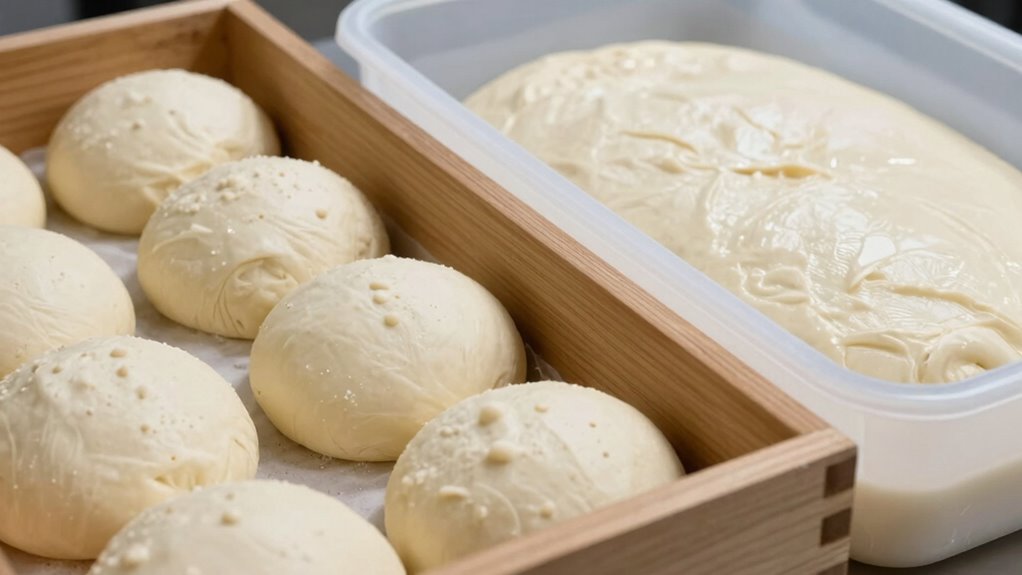
Dough balls need a separate proofing space from bulk dough because they respond more quickly to temperature and humidity changes due to their smaller size. Proper environment controls help you fine-tune fermentation, prevent over-proofing, and improve elasticity for easier shaping. Maintaining specific conditions guarantees uniform proofing, which leads to better final texture and appearance. If you want to understand how to optimize proofing for perfect results, there’s more to explore.
Open a free Amazon Business account
Business pricing, bulk buying and tax-exempt orders.
As an affiliate, we earn on qualifying purchases.
Key Takeaways
- Smaller dough balls respond faster to environmental changes, requiring more precise proofing conditions.
- Individual proofing allows better control over temperature and humidity for uniform fermentation.
- Differentiating spaces prevents over-proofing of dough balls while bulk dough continues fermenting.
- Separate proofing spaces ensure optimal elasticity and shaping qualities for dough balls.
- Customized environments improve final product quality by maintaining consistent proofing conditions.
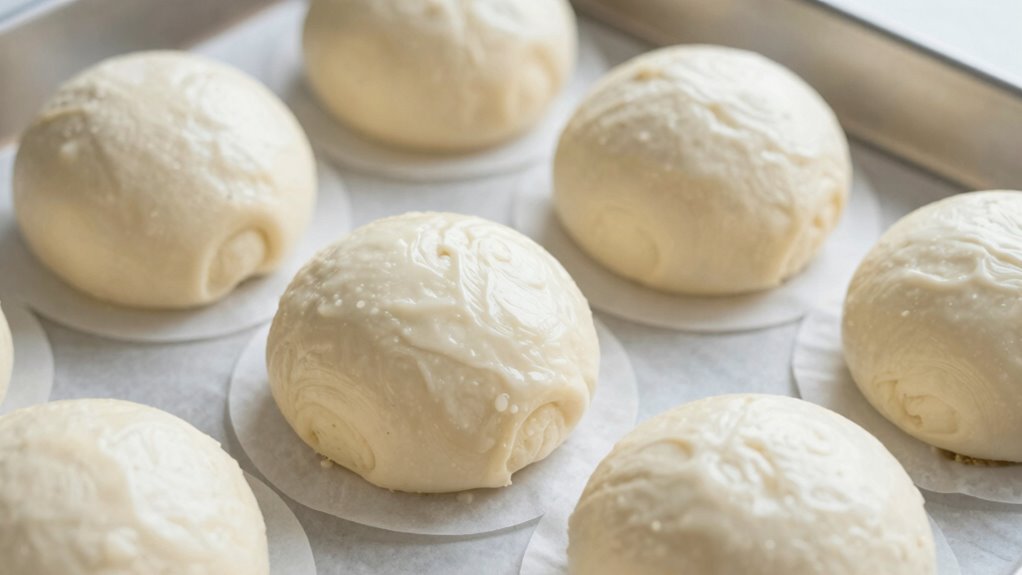
Dough balls are smaller and have less mass, meaning they respond more quickly to temperature and humidity changes. This makes precise control over their proofing environment critical. When you maintain a dedicated proofing space, you can fine-tune factors like temperature and humidity to suit the needs of the dough balls, ensuring they ferment just enough without over-proofing. Proper fermentation timing is crucial here; if you wait too long, the dough becomes over-proofed, losing its structure and resulting in a flatter or denser final product. Conversely, under-proofed dough balls won’t develop enough flavor or elasticity, making them difficult to shape and bake to perfection.
Your dough shaping techniques also depend heavily on the proofing environment. Proper proofing allows the dough to relax and develop the right elasticity, making shaping easier and more consistent. If the environment isn’t ideal, the dough can become too tight or too slack, both of which hinder achieving a smooth, uniform ball. Having a dedicated proofing space allows you to monitor and adjust conditions to optimize elasticity and prevent issues like tearing or shrinking during shaping. This control ultimately leads to a more uniform, professional-looking crust, which is often the goal for bakers aiming for bakery-quality results. Additionally, a dedicated space helps maintain a clean environment that supports healthy fermentation and dough health, which can be influenced by environmental factors. Maintaining consistent conditions over time is essential for reliable proofing results, especially in variable climates or during different seasons. Ensuring consistent conditions in this space also helps in managing the proofing process more effectively over time.
As an affiliate, we earn on qualifying purchases.
Frequently Asked Questions
How Does Ambient Temperature Affect Proofing Times for Dough Balls?
Ambient temperature impacts proofing times by influencing fermentation rate and yeast activity. When it’s warmer, yeast activity speeds up, leading to faster proofing, so your dough balls rise quicker. Conversely, cooler temperatures slow fermentation, extending proofing times. You should monitor the environment closely, adjusting proofing duration accordingly. Keeping a consistent, ideal temperature guarantees your dough develops the right texture and flavor without over-proofing or under-proofing.
Can Proofing Space Size Influence Dough Ball Texture?
Think of proofing space size as the stage for your dough balls’ performance; a cramped space stifles their elasticity, making them stiff and less responsive. A well-sized space supports consistent fermentation, allowing dough balls to develop better elasticity and airy texture. When the space is just right, it fosters uniform fermentation, resulting in dough balls with a tender crumb and ideal rise, elevating your baked goods to bakery-quality perfection.
What Are the Best Materials for Proofing Containers?
You should choose proofing containers made from materials like plastic or metal, which help maintain consistent fermentation temperature and support dough elasticity. These materials are durable, easy to clean, and don’t absorb moisture or odors, ensuring your dough proofing environment stays stable. Proper containers help control humidity and temperature, which is essential for peak fermentation, resulting in well-developed dough with ideal elasticity and texture.
How Do Humidity Levels Impact Dough Ball Proofing?
Humidity levels play a sneaky role in dough ball proofing. Too much humidity, and your dough’s basically auditioning for mold prevention’s worst-case scenario—turning into a slimy mess. Too little, and it dries out faster than your patience during a long knead. Proper humidity control keeps dough moist, ensuring a perfect rise without mold. Keep an eye on those levels, or your dough might just throw a fit.
Is Special Equipment Needed for Proofing Large Quantities of Dough Balls?
Yes, you’ll need specialized proofing equipment for large quantities of dough balls. This equipment guarantees proper dough ball storage and maintains consistent temperature and humidity levels vital for ideal proofing. Commercial proofers or proofing cabinets are designed to handle bulk dough and provide even, controlled environments. Using the right proofing equipment helps prevent over-proofing or under-proofing, ensuring your dough balls develop the perfect texture and volume every time.
bakery proofing environment controller
As an affiliate, we earn on qualifying purchases.
As an affiliate, we earn on qualifying purchases.
Conclusion
Remember, giving dough balls their own proofing space guarantees they develop the right texture and rise properly. If they’re cramped, they won’t expand evenly, leading to dense results. Did you know that properly proofed dough can increase volume by up to 50%? That’s a huge difference in bread quality! So, always set aside enough space for your dough balls. It’s a simple step that can make a big impact on your final bake.
As an affiliate, we earn on qualifying purchases.
proofing space thermometer hygrometer
As an affiliate, we earn on qualifying purchases.
As an affiliate, we earn on qualifying purchases.
NFL season / tailgating Picks
team gear
As an affiliate, we earn on qualifying purchases.