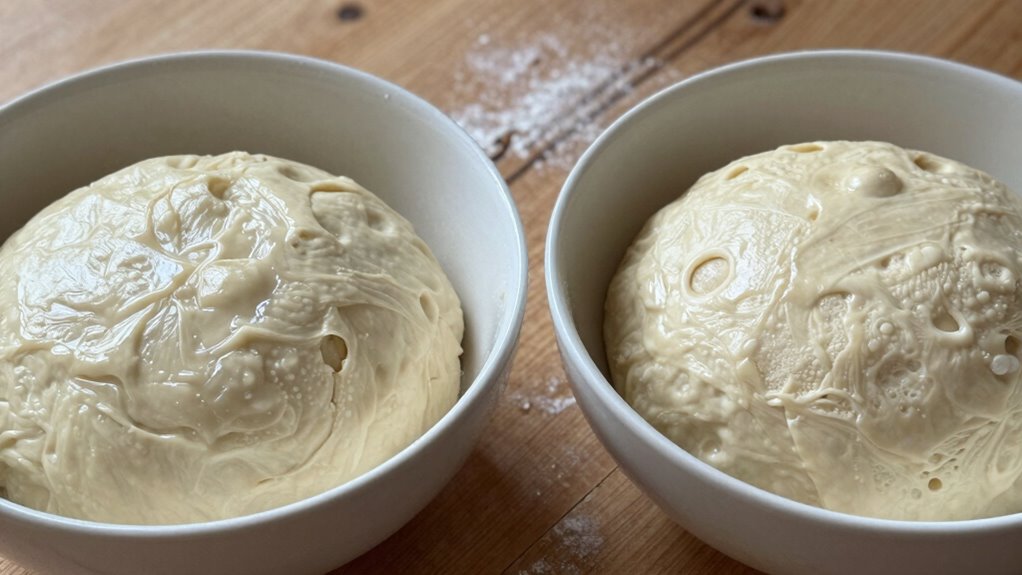
If you need bread fast, opt for the same-day dough, which is quicker and more convenient, though it may result in denser bread with milder flavors. If you have extra time and want richer, more complex flavors, choose overnight fermentation, which develops better aroma, crust, and crumb. Consider your schedule, flavor goals, and how much planning you’re willing to do. To make the best choice for your baking, explore the details that follow.

Get baking supplies delivered free with Prime
- Fast, free delivery on millions of items
- Prime Video, Amazon Music and more included
- Member-only deals all year
Key Takeaways
- Consider your schedule: use same-day dough for quick baking, overnight for advanced flavor development.
- Decide on flavor complexity: longer fermentation enhances aroma and taste, ideal for artisan bread.
- Assess texture preferences: overnight fermentation yields lighter, airier crumb and better crust.
- Evaluate handling needs: longer fermentation makes dough easier to shape and work with.
- Balance convenience and quality: choose same-day for speed, overnight for richer, more complex bread.
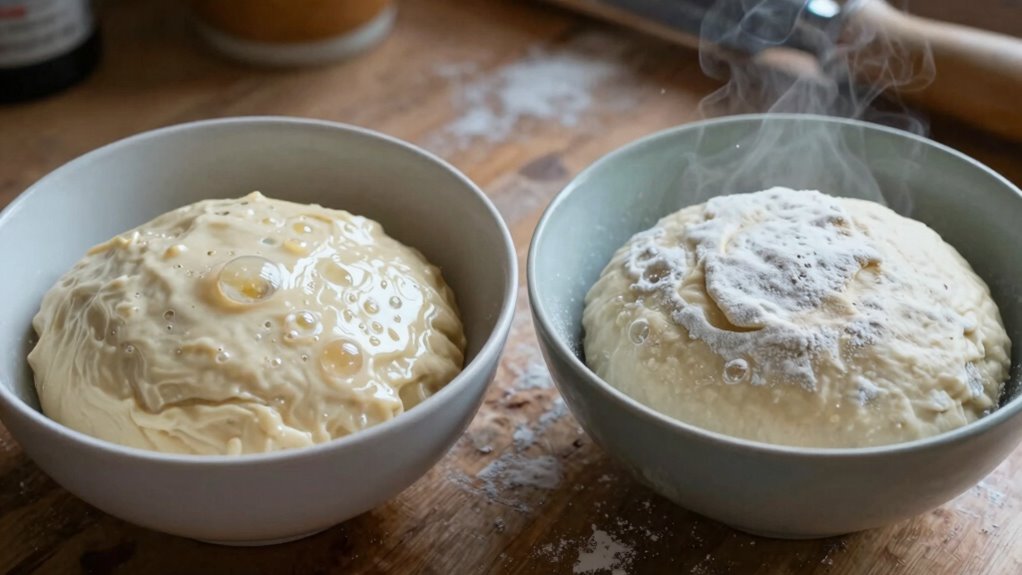
Are you wondering whether to use same-day dough or let your dough rest overnight? The decision largely depends on what you’re aiming for in your baking. If you’re in a hurry, same-day dough is a practical choice. It typically involves a quicker fermentation process, meaning the dough rises faster and is ready to shape and bake within a few hours. This method is convenient when you want fresh bread on short notice, but it can limit the complexity of flavors that develop during longer fermentation. On the other hand, letting your dough rest overnight allows for a slower fermentation, which significantly influences flavor development. As the dough sits, natural enzymes and wild yeast work more extensively, breaking down starches and proteins. This extended fermentation time produces a richer, more nuanced flavor profile that’s often preferred by seasoned bakers and connoisseurs.
Fermentation speed is a key factor in choosing between these methods. With same-day dough, the rapid rise is ideal for those pressed for time, but it can result in a milder taste and a less complex aroma. In contrast, overnight fermentation slows down the yeast activity, giving the dough more time to develop deep, tangy flavors and a better crust. This slower process also enhances the dough’s texture, making the final bread lighter and airier with a more refined crumb. If your goal is to maximize flavor, overnight fermentation is the way to go, especially for artisan styles like sourdough or rustic loaves. Additionally, understanding fermentation process can help you fine-tune your baking technique for optimal results. Incorporating proper fermentation techniques can further elevate the quality of your bread and ensure consistent results.
Ultimately, your choice depends on your schedule and flavor preferences. If you’re short on time and want a quick, reliable result, go for same-day dough. But if you’re planning ahead and crave a bread with complex flavors and enhanced texture, giving your dough overnight rest is worth the wait. Keep in mind that longer fermentation not only improves flavor development but also can make the dough easier to handle and shape. So, consider your priorities—whether it’s speed or taste—and choose the method that best fits your baking plans. By understanding how fermentation speed affects flavor development, you can tailor your process to produce the perfect loaf every time.
As an affiliate, we earn on qualifying purchases.
Frequently Asked Questions
Can I Freeze Either Type of Dough for Later Use?
Yes, you can freeze either type of dough for later use. For dough freezing, wrap it tightly in plastic wrap or place it in an airtight container to prevent freezer burn. Use proper storage techniques by labeling the dough with the date. When ready, thaw it in the refrigerator overnight. Freezing helps extend your dough’s shelf life, making it convenient to prepare baked goods whenever you want.
How Does Dough Hydration Affect Fermentation Time?
A gentle nudge reveals that dough hydration considerably influences fermentation time. Higher hydration levels promote better gluten development, which allows yeast activity to flourish more rapidly, speeding up fermentation. Conversely, lower hydration results in a firmer dough that takes longer to ferment, as gluten development slows and yeast activity becomes more subdued. So, by adjusting hydration, you control the pace of fermentation, tailoring it to your baking schedule and desired dough characteristics.
What Types of Bread Benefit Most From Overnight Fermentation?
You’ll find that artisan breads like sourdough, ciabatta, and baguettes benefit most from overnight fermentation. This extended fermentation timing allows the dough to develop complex flavors and improved texture. By letting the dough ferment overnight, you enhance flavor development while giving gluten more time to strengthen. This process results in bread with a deeper taste and better crust, making overnight fermentation ideal for bakers seeking richer, more flavorful loaves.
Is There a Significant Flavor Difference Between the Two Methods?
Yes, there’s a noticeable flavor difference between same-day and overnight dough. The overnight fermentation enhances flavor contrast by developing deeper, more complex fermentation nuances, resulting in a richer taste. With same-day dough, the flavors are fresher and milder, but it lacks the depth that slow fermentation provides. If you want a bread with more pronounced, layered flavors, opting for overnight fermentation is your best choice.
How Do I Adjust Recipes for Different Fermentation Durations?
To adjust recipes for different fermentation durations, you need to modify the fermentation speed and dough texture. For longer fermentations, reduce yeast or starter amounts to slow down fermentation, enhancing flavor depth. For quicker fermentations, increase yeast slightly for a faster rise. Keep an eye on dough texture—long fermentations develop a more complex structure, while shorter ones produce a softer, less developed crumb. Adjust timing based on your desired flavor and texture outcomes.
As an affiliate, we earn on qualifying purchases.
Conclusion
Choosing between same-day and overnight dough depends on your schedule and flavor preferences. If you’re short on time, same-day dough can still deliver great results with a slightly milder taste. However, letting dough rest overnight can develop richer flavors and better texture, making your baked goods even more delicious. Did you know that dough left to ferment overnight can improve gluten development by up to 50%, resulting in a fluffier, more elastic crust? Happy baking!
As an affiliate, we earn on qualifying purchases.
As an affiliate, we earn on qualifying purchases.
Fall Picks
fall essentials
As an affiliate, we earn on qualifying purchases.