
To fix a pizza that cooks too fast near the flame, start by repositioning it further from the direct heat source or move it to a cooler oven zone. Lower the oven temperature or manage the flame intensity if possible. You can also rotate the pizza regularly to promote even cooking. Pre-baking the crust slightly before topping can help prevent burning. For more tips on controlling heat and achieving perfect results, continue exploring these techniques.

Get baking supplies delivered free with Prime
- Fast, free delivery on millions of items
- Prime Video, Amazon Music and more included
- Member-only deals all year
Key Takeaways
- Move the pizza further from the direct flame to prevent over-browning.
- Reduce the oven or flame temperature to slow down cooking near the heat source.
- Rotate the pizza regularly to ensure even heat distribution.
- Pre-bake the crust slightly to create a barrier against rapid burning.
- Manage flame intensity carefully, using a lower or more controlled heat source.
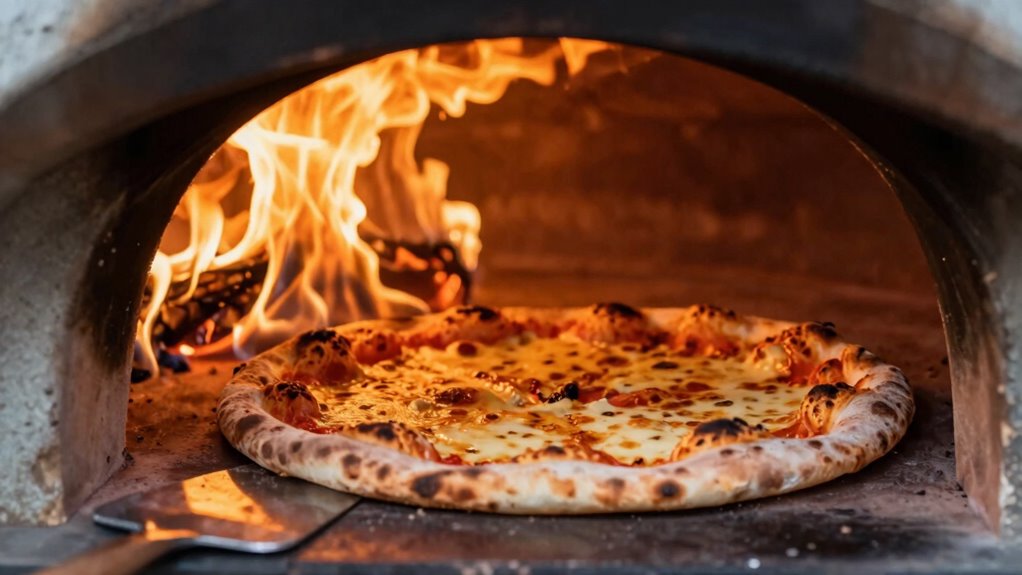
If your pizza is cooking too quickly near the flame, it can result in burnt crusts and undercooked toppings, ruining what should be a perfect pie. The key to fixing this problem is understanding how pizza dough consistency and oven temperature control influence your cooking process. When the dough is too thin or too stiff, it can cause uneven heat absorption, making certain parts cook faster than others. Achieving an ideal pizza dough consistency—one that’s elastic yet sturdy—helps ensure even cooking. If your dough is too thin, it will crisp up too quickly near the flame, leading to burnt edges. Conversely, if it’s too thick or dense, it won’t cook evenly, especially around the toppings. You want a dough that’s soft yet resilient, which promotes uniform heat distribution and prevents hotspots. Additionally, using a consistent oven temperature helps maintain even cooking throughout the process.
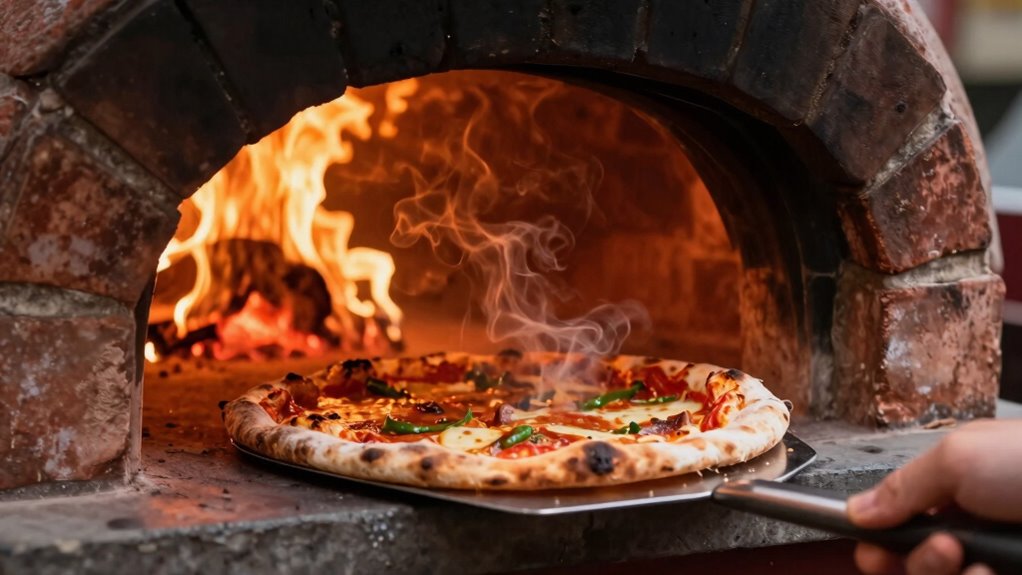
Oven temperature control is just as critical. Many home pizza makers underestimate the importance of managing heat properly. When the oven is excessively hot, especially near the flame, it causes rapid cooking at the top and bottom, often burning the crust before the toppings are done. To fix this, lower the oven temperature slightly or adjust your heat source if possible. For gas ovens or wood-fired setups, controlling the flame intensity helps regulate the heat reaching the pizza. Use an oven thermometer to monitor the temperature accurately, maintaining a consistent, moderate heat level. This prevents the crust from cooking too fast near the flame while giving the toppings enough time to cook thoroughly.
Another practical step involves adjusting your position in the oven. If you notice the pizza browning too quickly on one side, try moving it away from the direct flame, perhaps to a slightly cooler zone of the oven. Rotating the pizza regularly during cooking can also promote even heat exposure, preventing one side from overcooking. Additionally, consider pre-baking the crust for a couple of minutes before adding toppings. This step helps develop a more uniform crust that resists burning once topped and returned to the oven.
As an affiliate, we earn on qualifying purchases.
Frequently Asked Questions
Can Adjusting Oven Temperature Prevent Uneven Cooking?
Yes, adjusting oven temperature can prevent uneven cooking. You should check your oven’s calibration to guarantee accurate heat levels. If your oven has heat zones, you can reposition your pizza to avoid hot spots, promoting even cooking. Lowering the temperature slightly might help prevent the pizza from cooking too quickly near the flame, giving it more time to cook evenly throughout. Regular calibration and understanding your oven’s heat zones are key.
What Types of Baking Stones Help Control Heat Distribution?
Ever imagined a perfectly even crust? Refractory bricks and ceramic insulation baking stones help control heat distribution, preventing hot spots and uneven cooking. Refractory bricks absorb and radiate heat evenly, while ceramic insulation maintains consistent temperatures inside your oven. Using these stones guarantees your pizza bakes uniformly, avoiding burning near the flame and undercooking elsewhere. Invest in a quality baking stone with these materials to achieve consistent, delicious results every time.
How Does Pizza Dough Thickness Affect Cooking Speed?
Thicker pizza dough slows down cooking, giving you more control over dough elasticity and crust coloration. Thin dough cooks quickly, risking over-browning near the flame, while thicker dough provides a more even bake. By adjusting thickness, you guarantee the crust develops a desirable color without burning, and the interior remains moist and chewy. Experiment with dough thickness to find the perfect balance for your oven and desired pizza style.
Are There Specific Toppings That Influence Cooking Time?
Yes, some toppings influence cooking time more than others. Topping moisture and density play key roles—moist toppings like fresh tomatoes or mushrooms can slow down cooking, while dense toppings like pepperoni or sausage heat faster. High-moisture toppings release steam, making the pizza cook unevenly, so balancing moisture and choosing toppings with appropriate density help you control cooking speed and achieve a perfectly cooked pizza.
Can Airflow Modifications Improve Pizza Baking Near the Flame?
Ventilation improvements and flame control can definitely help you bake pizza more evenly near the flame. By adjusting airflow, you can reduce hot spots and prevent the crust from burning too quickly. Improving ventilation allows heat to distribute more uniformly, giving you better control over cooking time. So, experiment with vents or fans to redirect airflow, and tweak the flame intensity to achieve consistent, perfectly cooked pizza every time.
As an affiliate, we earn on qualifying purchases.
Conclusion
Next time you notice your pizza browning too quickly near the flame, remember, sometimes a simple tweak can turn the chaos into perfection. Like catching a fleeting rainbow just as it fades, adjusting your oven’s position or temperature can restore balance, revealing that golden crust you crave. With a little patience and awareness, you’ll find your pizza becomes a canvas of even, deliciously cooked slices, just waiting for you to savor every bite.
As an affiliate, we earn on qualifying purchases.
As an affiliate, we earn on qualifying purchases.
Fall Picks
fall essentials
As an affiliate, we earn on qualifying purchases.