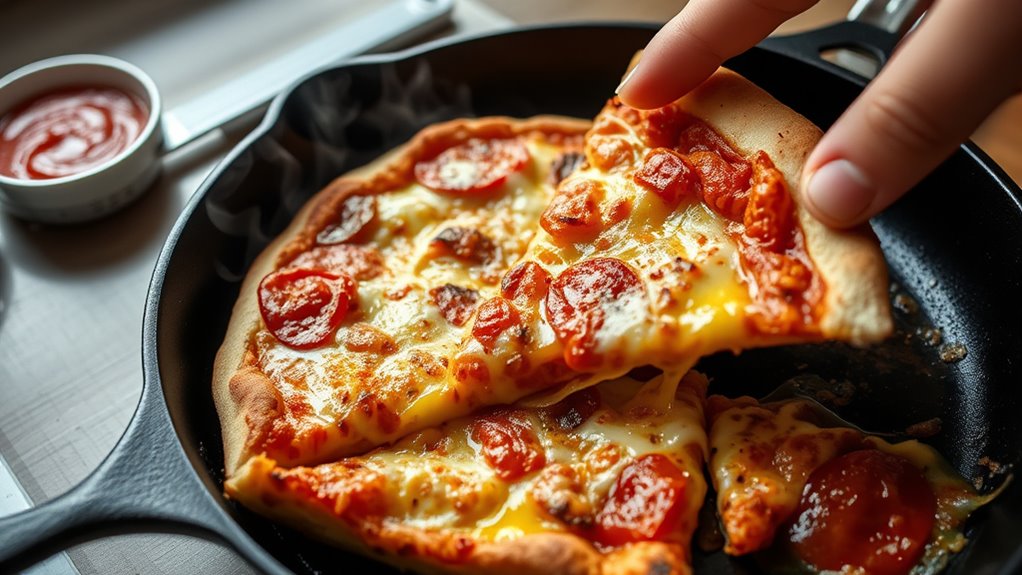

To reheat leftover pizza, use different techniques based on your preference. The skillet method crisps the crust best, while the oven preserves freshness and texture for multiple slices—heat at 375°F for about 10 minutes. For a quick fix, microwave with a cup of water for moisture, but keep an eye on it to prevent sogginess. Want tips to perfect every slice? Continue and discover more tricks for serving leftover pizza just right.

Get baking supplies delivered free with Prime
- Fast, free delivery on millions of items
- Prime Video, Amazon Music and more included
- Member-only deals all year
Key Takeaways
- Use a skillet or oven for crispy crust, reheating slices at medium heat or 375°F for about 10 minutes.
- Microwave slices briefly with a cup of water to add moisture and prevent sogginess.
- Store leftovers in airtight containers or resealable bags to maintain freshness and prevent flavor transfer.
- Allow slices to cool completely before sealing to avoid condensation and preserve texture.
- Reheat different toppings separately to prevent flavor mixing and maintain quality.
Ever wondered how to serve leftover pizza in a way that tastes just as good as when it was fresh? The key is in how you store and reheat it. Proper storage containers are essential to keep your pizza fresh and prevent it from drying out or absorbing other fridge odors. Use airtight containers or resealable plastic bags to seal your slices tightly, especially if you want to preserve the pizza’s original flavors and textures. When storing, consider separating different types of pizza or toppings to avoid flavor transfer. For example, if you have a slice loaded with veggies and another with meats, storing them separately helps maintain their individual tastes.
Now, when it’s time to reheat, the goal is to restore that crispy crust and gooey cheese. The best method depends on how much time you have and your preferred texture. If you’re in a rush, using a microwave is quick and convenient. Just place your slice on a microwave-safe plate, cover it with a paper towel to prevent splatters, and heat it in short bursts of about 30 seconds. Keep an eye on it to avoid overcooking, which can make the crust soggy or rubbery. To improve the texture, consider placing a cup of water in the microwave with your pizza; the moisture helps prevent the crust from becoming too chewy.
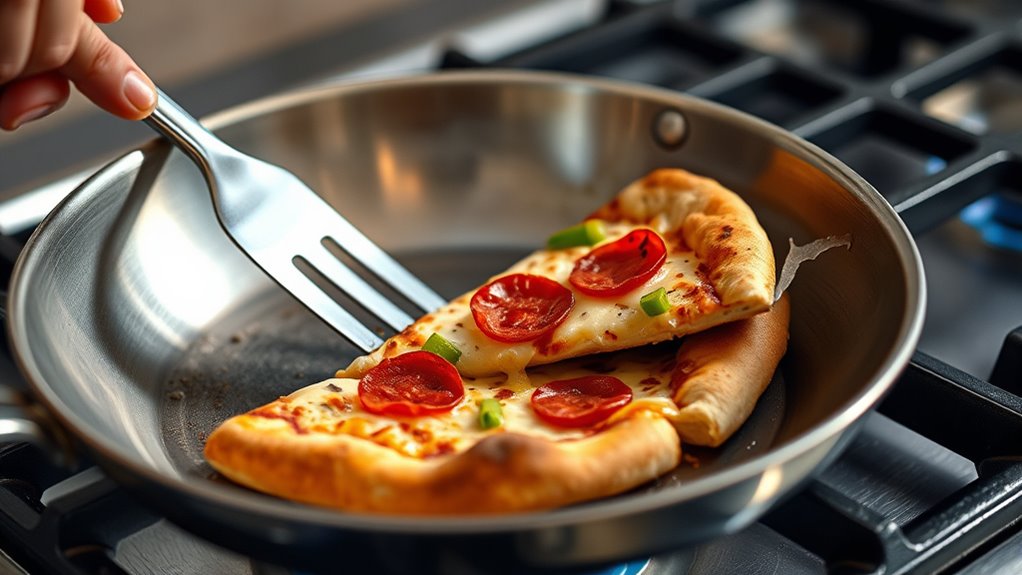
For a more crusty and evenly heated result, reheating in a skillet or oven works better. In a skillet, set it over medium heat, add the leftover slice, and cover with a lid or foil. This traps the heat and melts the cheese while crisping the crust. It’s a simple, effective way to revive your pizza without losing that satisfying crunch. Alternatively, if you’re reheating multiple slices or an entire pizza, the oven is your best bet. Preheat to around 375°F (190°C), place the pizza directly on the oven rack or a baking sheet, and heat for about 10 minutes. This method ensures even heating and retains the pizza’s original texture. Additionally, selecting a high-quality projector can enhance your movie night experience when enjoying your leftovers in front of the TV.
As an affiliate, we earn on qualifying purchases.
Frequently Asked Questions
Can I Freeze Leftover Pizza for Later Use?
Yes, you can freeze leftover pizza for later use. To do this, make sure to use proper freezing techniques by wrapping each slice tightly in plastic wrap or foil, then placing them in an airtight container or freezer bag. This helps preserve your pizza toppings and prevents freezer burn. When you’re ready to enjoy it, reheat the pizza thoroughly for the best taste and texture.
What’s the Best Way to Store Leftover Pizza?
You should store leftover pizza in an airtight container or wrap it tightly with plastic wrap or foil to keep the pizza crust crisp and prevent it from drying out. Place it in the refrigerator within two hours of serving. This helps maintain the original cheese texture and prevents odors from affecting the flavor. For longer storage, consider freezing it, but always reheat to enjoy that fresh taste and texture.
How Long Is Leftover Pizza Safe to Eat?
Leftover pizza is safe to eat for 3 to 4 days when stored properly in the fridge. Food safety guidelines warn that bacterial growth can occur after this period, increasing the risk of foodborne illness. To keep it safe, always reheat it thoroughly to an internal temperature of 165°F. If it smells or looks off, it’s best to discard it to avoid potential health issues.
Does Reheating Pizza Affect Its Nutritional Value?
Reheating pizza doesn’t turn it into a nutritional wasteland, so don’t panic. While some nutrient loss, like vitamin C, might occur, most of the nutrients stay intact thanks to rapid heating. Your pizza’s overall nutritional impact remains pretty steady, so reheating is more about enjoying warm slices than sacrificing health. Just don’t overdo it—burnt crust isn’t exactly a nutrient boost!
Can I Reheat Pizza in a Microwave Without Making It Soggy?
Yes, you can reheat pizza in a microwave without making it soggy. To improve microwave crispness and guarantee reheating consistency, place a paper towel under the slice to absorb excess moisture. Use short intervals, around 30 seconds, and check frequently. Avoid over-heating, which can cause sogginess. For better results, consider using a microwave crisper pan or finishing with a quick broil in the oven.
As an affiliate, we earn on qualifying purchases.
Conclusion
Now that you’ve got the perfect reheating tricks up your sleeve, leftover pizza will never be a soggy disappointment again. Think of these techniques as your trusty toolbox, turning cold, limp slices into crispy, gooey delights. With a little effort, you’ll make every bite feel just as fresh as when it first left the oven. So go ahead—reheat like a pro and enjoy that pizza masterpiece all over again, because leftovers deserve a second chance to shine.
microwave moisture cover for pizza
As an affiliate, we earn on qualifying purchases.
As an affiliate, we earn on qualifying purchases.
airtight pizza storage containers
As an affiliate, we earn on qualifying purchases.
As an affiliate, we earn on qualifying purchases.
Halloween Picks
halloween
As an affiliate, we earn on qualifying purchases.