In humid climates, you can prevent sticky dough by controlling your environment with dehumidifiers, air conditioning, and proper ventilation. Adjust your recipes by reducing liquids and adding extra flour to absorb moisture and strengthen the dough. Keep a close eye on texture, adding flour if it’s too sticky or small amounts of water if it’s too dry. Mastering these tips helps you work smoothly despite high humidity—keep going to discover more strategies to perfect your baking.

Get baking supplies delivered free with Prime
- Fast, free delivery on millions of items
- Prime Video, Amazon Music and more included
- Member-only deals all year
Key Takeaways
- Use dehumidifiers and proper ventilation to reduce indoor moisture levels.
- Adjust recipes by decreasing liquids and increasing flour to counteract excess humidity.
- Monitor dough texture closely during mixing, adding flour or water as needed.
- Keep workspace temperature and humidity stable with air conditioning and airflow management.
- Rely on tactile feedback to tweak dough consistency, preventing stickiness and ensuring manageability.
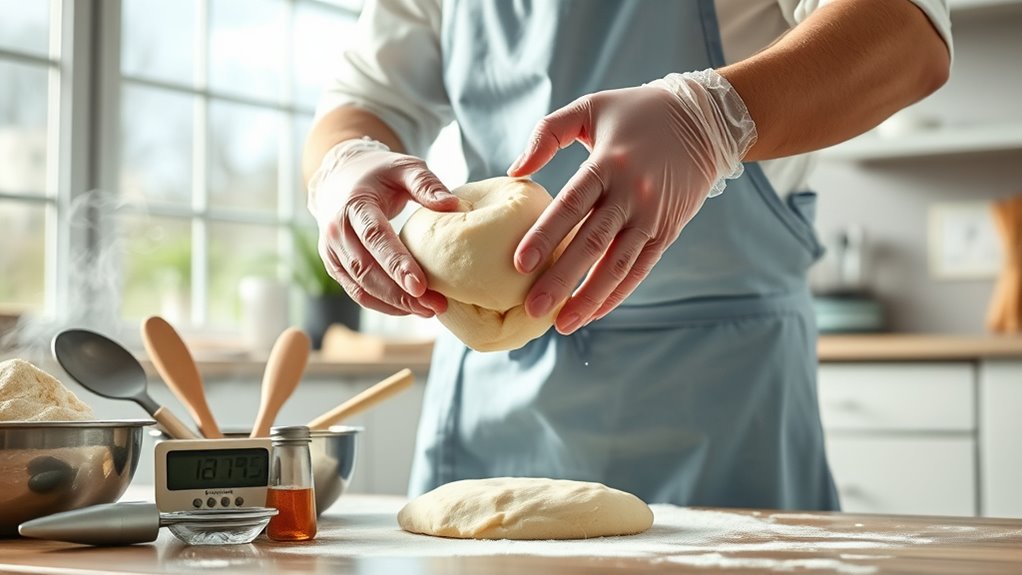
Working in humid climates can be challenging because high moisture levels affect both your comfort and productivity. When humidity rises, it’s not just your skin that feels sticky; your baking process, especially dough preparation, becomes more complicated. To keep your dough from turning into a sticky, unmanageable mess, you need to focus on humidity control and ingredient adjustments. These strategies help you maintain consistency and quality despite the damp environment.
Humidity control is vital. If you’re working in an area where moisture levels fluctuate, consider using dehumidifiers or air conditioning to reduce excess humidity. Proper ventilation also plays a key role, allowing moisture to escape and preventing the air from becoming overly saturated. Keeping the workspace dry helps you better gauge dough consistency and prevents ingredients from absorbing too much moisture from the air. When humidity is high, your dough can quickly become too wet, leading to difficulties in kneading and shaping. Controlling the ambient moisture minimizes these issues and creates a more predictable environment for baking. Additionally, understanding the impact of humidity on baking can help you better anticipate how your dough will behave in different conditions.
Use dehumidifiers, air conditioning, and proper ventilation to keep your workspace dry and maintain consistent dough quality.
Adjusting your ingredients is equally important. In humid conditions, you may need to modify your recipe to account for the extra moisture. For example, reducing the amount of liquid called for in the recipe can help prevent the dough from becoming overly sticky. Conversely, adding a little more flour can help absorb excess moisture and strengthen the dough’s structure. Be precise with your measurements, as small changes can make a big difference. You might also consider using ingredients that are less susceptible to humidity, such as using bread flour rather than all-purpose flour, which has a higher protein content and better gluten development. These ingredient adjustments help create a more stable dough that’s easier to work with in moist environments.
Monitoring the dough’s texture is essential. Instead of sticking rigidly to the recipe, pay close attention to how the dough feels during mixing and kneading. If it’s too sticky, sprinkle in small amounts of flour gradually until you reach the ideal consistency. If it feels dry or crumbly, add a tiny bit of water or milk, but do so cautiously. Consistent observation and willingness to tweak ingredients based on environmental conditions ensure your dough remains manageable.
In humid climates, controlling the environment and adjusting your ingredients are your best tools to avoid sticky dough. These approaches help you adapt to the moisture, ensuring your baking process stays smooth and your final product turns out just right. With a little attention, you can overcome the challenges posed by humidity and keep your baking game strong, no matter how damp the air gets.
Products Worth Considering

Ninja Artisan 5-in-1 Portable Electric Pizza Oven, Blue & Gold

Cuisinart 6-Quart Basket Air Fryer with Viewing Window, Stainless Steel and Black (AIR-200NAS)

Cuisinart Portable Tabletop Propane Patio Heater, 11,000 BTU, Red
As an affiliate, we earn on qualifying purchases.
Frequently Asked Questions
How Can I Tell if My Dough Is Too Sticky?
You can tell if your dough is too sticky by checking its consistency during mixing. If it sticks excessively to your hands or the bowl, it’s likely over-hydrated. Adjust by using less water or choosing a different flour with better absorption. Proper dough hydration and flour selection are key. If it feels overly tacky and difficult to handle, knead in a little more flour until it’s smooth and manageable.
Are There Specific Ingredients That Resist Humidity Better?
If you want ingredients that resist humidity better, consider using bread flour instead of all-purpose, as it offers improved ingredient stability and humidity resistance. For example, a baker in a humid city switched to bread flour, and her dough remained manageable even during peak summer months. These ingredients help maintain the right dough consistency by resisting moisture absorption, making your baking process smoother and more consistent despite humidity challenges.
Does Humidity Affect Dough Fermentation Time?
Humidity impacts fermentation rate by either speeding it up or slowing it down, depending on the level of moisture in the air. When humidity is high, your dough ferments faster because moisture encourages yeast activity. Conversely, low humidity can slow fermentation. To manage this, monitor your dough closely and adjust fermentation times accordingly, keeping an eye on how the humidity impact influences your dough’s rise and texture.
Can Using a Fan Help Reduce Dough Stickiness?
Yes, using a fan can help reduce dough stickiness by improving airflow control in your workspace. It helps evaporate excess moisture, making the dough less sticky and easier to handle. Just make certain you adjust the baking temperature accordingly, as increased airflow can cool the dough surface. Proper airflow management keeps the dough manageable and prevents it from becoming overly sticky in humid conditions.
Is There a Recommended Storage Method for Dough in Humid Environments?
For dough preservation in humid environments, you should store it in an airtight container or wrap it tightly with plastic wrap to prevent moisture absorption. Using a cool, dry place helps with humidity control, reducing stickiness. You can also consider refrigerating the dough, which slows fermentation and minimizes humidity effects. These methods keep your dough manageable and fresh, making baking easier despite the high humidity.
Conclusion
As you step back into the humid air, imagine your dough as a gentle breeze, not a storm. With the right adjustments, you’ll keep it firm and manageable, avoiding the sticky chaos. Embrace the dance between moisture and flour, like a seasoned sailor steering through calm and storm. Remember, patience and care turn sticky struggles into flawless creations. So, stay calm, adapt, and let your baking flourish even in the thickest, most humid days.