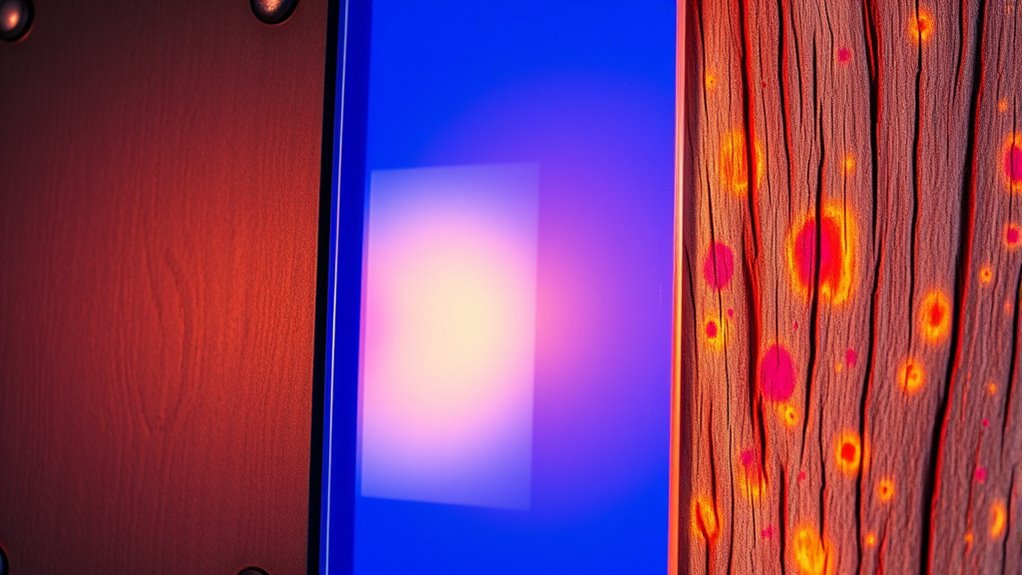

When measuring temperature on different surfaces, understanding emissivity is essential because it affects how much thermal radiation each material emits. Surfaces like shiny metals have low emissivity, causing infrared devices to underestimate temperatures unless adjusted, while matte surfaces have higher emissivity and give more accurate readings. Adjusting your device for emissivity improves accuracy. To get reliable results across various surfaces, it’s important to learn how emissivity influences thermal measurements and how to compensate for it.

Get baking supplies delivered free — and shop member deals
- Fast, free delivery on millions of items
- Access to Prime Big Deal Days deals on October 6–7
- Prime Video, Amazon Music and more included
Key Takeaways
- Emissivity determines how accurately an infrared device measures surface temperature, varying across different materials.
- Adjusting the infrared thermometer’s emissivity setting to match the surface improves measurement accuracy.
- Shiny or reflective surfaces have low emissivity, often requiring calibration for precise temperature readings.
- Environmental factors like dust or moisture can alter surface emissivity and affect thermal measurements.
- Proper calibration and knowledge of surface properties are essential for reliable temperature measurements on diverse surfaces.
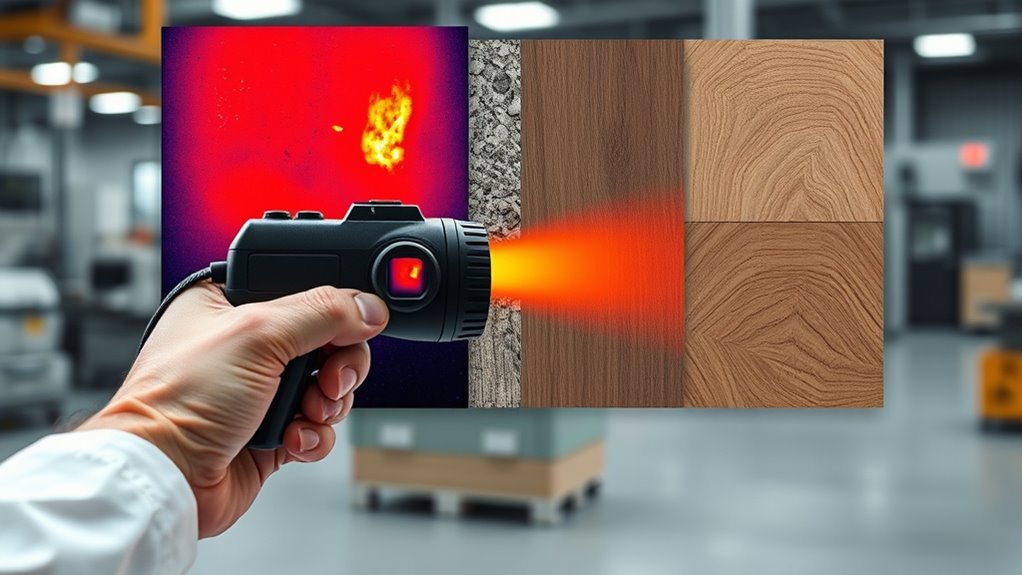
Understanding how surfaces emit thermal radiation is essential for accurately measuring temperature, especially in environments where direct contact isn’t possible. When you’re using infrared thermometers or thermal cameras, the key factor influencing your readings is emissivity—a property that determines how efficiently a surface radiates energy compared to a perfect blackbody. Without accounting for emissivity differences, your temperature measurements can be be significantly off. That’s why proper infrared calibration is crucial. It ensures your device’s readings reflect the true surface temperature by compensating for the emissivity of the material you’re measuring.
Accurate temperature measurement depends on understanding and adjusting for surface emissivity.
To get accurate results, you need to adjust your infrared thermometer’s settings through emissivity adjustment. Many devices allow you to set specific emissivity values based on the surface you’re evaluating. For example, shiny metals have low emissivity, often around 0.1 to 0.3, causing infrared devices to underestimate their actual temperature if not adjusted properly. Conversely, matte surfaces like asphalt or human skin have high emissivity values, typically close to 0.9, making them more straightforward to measure. When you perform infrared calibration, you essentially fine-tune your instrument to match the surface’s emissivity, which helps eliminate errors caused by the thermal properties of different materials.
Remember, accurate emissivity adjustment isn’t just about inputting the right number; it involves understanding the material you’re measuring. If you’re working with unfamiliar surfaces, look up their typical emissivity values or perform a calibration against a known temperature source. Some advanced infrared thermometers come with emissivity tables or allow you to measure the emissivity directly. This process enhances your measurement reliability, especially when working with reflective or metallic surfaces where standard readings will often be inaccurate without proper calibration. Additionally, proper calibration helps account for environmental factors that can influence thermal radiation, ensuring your measurements remain consistent over time.
It’s also worth noting that environmental factors can influence thermal radiation and affect your measurements. Dust, moisture, and surface coatings can alter emissivity, so regular calibration and adjustment are essential for precision. When you’re measuring temperature in critical applications—like industrial processes, scientific research, or medical diagnostics—taking the time to perform proper infrared calibration and emissivity adjustment can make all the difference. By understanding the surface properties and adjusting your device accordingly, you ensure your temperature readings are accurate, consistent, and reliable, no matter what surface you’re testing.
Frequently Asked Questions
How Does Emissivity Vary With Surface Contamination?
Surface contamination, like dirt or coating interference, can greatly change emissivity. When your surface is dirty or coated, it often lowers or varies the emissivity, making temperature readings less accurate. Dirt and coatings can create a barrier, reflecting or absorbing infrared radiation differently than clean surfaces. To guarantee precise measurements, you should clean surfaces regularly and be aware of any coatings that might alter emissivity, affecting your temperature readings.
Can Emissivity Be Adjusted for Aging Materials?
Adjusting emissivity for aging materials is like tuning a musical instrument—you need to account for changes over time. As surface roughness and material degradation occur, they alter the emissivity, making initial settings less accurate. You can update your measurements by recalibrating with reference points or using specialized instruments that account for these changes, ensuring reliable temperature readings despite surface aging. This keeps your measurements precise and trustworthy over time.
What Impact Do Surface Coatings Have on Emissivity?
Surface coatings markedly impact emissivity by altering the surface finish, which affects how much infrared radiation it emits. A smooth, durable coating can increase emissivity, helping you achieve more accurate temperature readings. Conversely, coatings with poor durability or rough finishes can decrease emissivity, leading to errors. Regularly assess and maintain surface coatings to guarantee consistent emissivity, especially on aging materials where coating degradation may occur, affecting measurement accuracy.
How Do Environmental Conditions Affect Temperature Measurements?
Environmental conditions like dust, humidity, and ambient temperature can influence your thermal imaging accuracy. They can alter infrared calibration, making your temperature readings less reliable. For precise measurements, you should account for these factors, clean your equipment regularly, and consider environmental influences during calibration. Keeping a stable environment ensures your thermal imaging provides consistent, accurate temperature readings regardless of changing conditions.
Are There Standard Emissivity Values for Common Materials?
You’ll find that standard emissivity values exist for common materials, like 0.95 for polished metals and 0.92 for human skin. Surface roughness and material reflectivity influence these numbers, making some surfaces appear more or less emissive. Imagine shining a flashlight on a smooth, shiny metal versus a rough, matte surface; their reflectivity changes how they emit heat. Use these values as a starting point for accurate temperature measurements.
Conclusion
Understanding emissivity helps you get accurate surface temperature readings, no matter the material. By knowing how different surfaces emit infrared radiation, you can avoid costly errors and make better decisions. So, next time you’re measuring temperature, ask yourself: are you accounting for emissivity? Because overlooking it could mean the difference between precise data and misleading results. Emissivity isn’t just a detail; it’s the key to accurate temperature measurement.
Fall Picks
fall essentials
As an affiliate, we earn on qualifying purchases.