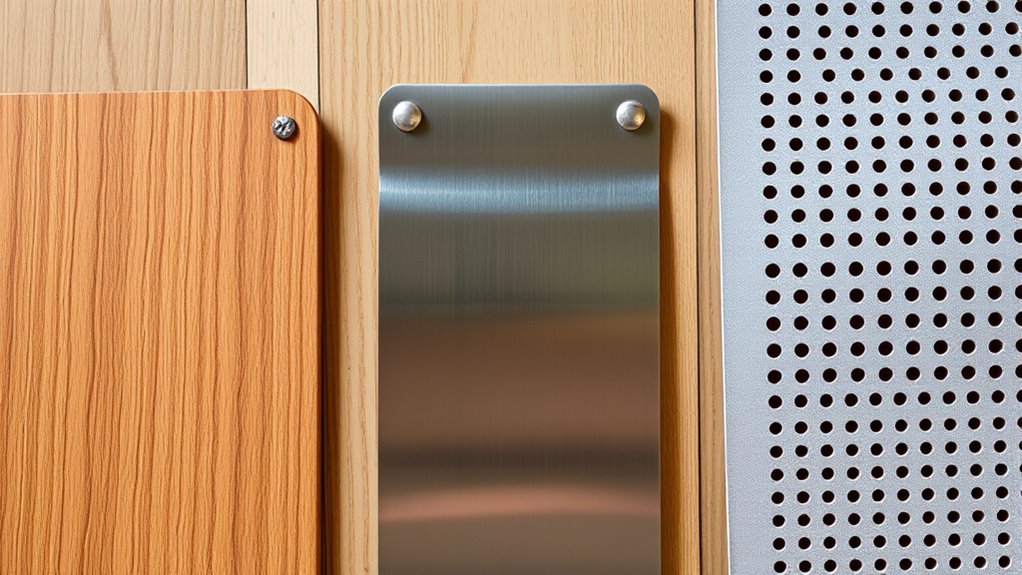

When choosing a peel, consider your baking style and priorities. Wood peels are sturdy, easy to handle, and gentle on dough, making them great for frequent baking. Metal peels heat up fast and respond quickly, ideal for professional or quick tasks, but can be tricky to handle. Perforated peels help reduce sticking and excess flour. Each option has benefits and drawbacks, so understanding their differences can help you select the best tool—learn more to find your perfect match.

Get baking supplies delivered free with Prime
- Fast, free delivery on millions of items
- Prime Video, Amazon Music and more included
- Member-only deals all year
Key Takeaways
- Consider durability: metal peels last longer and resist warping, while wood peels require regular oiling for longevity.
- Evaluate heat transfer: metal peels conduct heat quickly for rapid baking responses, whereas wood peels stay cooler to handle comfortably.
- Think about handling: wood peels are easier to maneuver, while metal peels offer faster, more precise placement and removal.
- Assess cleaning needs: wood peels need gentle maintenance, whereas metal and perforated peels are easier to clean but more prone to scratches.
- Match baking style: choose wood for traditional or frequent baking, metal for quick results, and perforated for dough with excess flour.
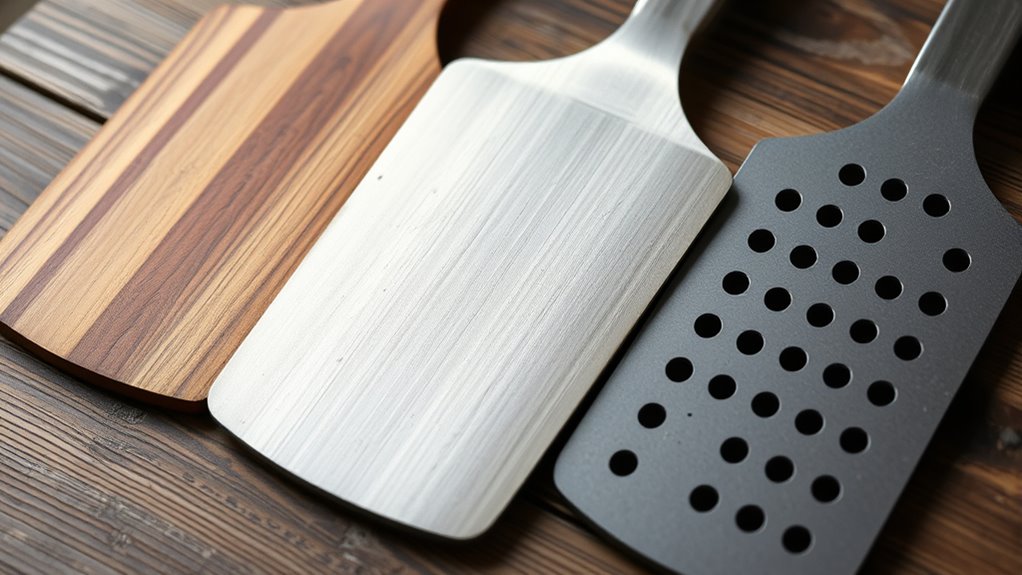
When selecting a peel for your baking needs, understanding the differences between wood, metal, and perforated options is essential. Each material offers unique advantages and considerations that can influence your baking experience. Material durability plays a significant role in choosing the right peel. Wood peels are known for their sturdiness and longevity, especially when properly cared for, making them a reliable choice for frequent bakers. Metal peels, typically made from aluminum or stainless steel, are also highly durable, resisting warping or cracking over time. Perforated peels, which are often metal, tend to be robust but can be more prone to dents and scratches if mishandled. Considering how each material holds up under regular use ensures you select a peel that will serve you well over the long term.
Choosing the right peel depends on durability, heat transfer, and your baking style.
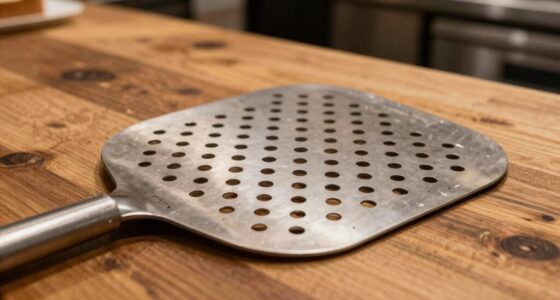
Heat transfer efficiency is another critical factor. Wood peels have a natural insulative property, meaning they don’t conduct heat as quickly as metal. This can be advantageous when handling hot dough or baked goods, as the peel remains cooler to the touch. Metal peels, on the other hand, excel in heat transfer efficiency. They quickly respond to temperature changes, allowing for rapid adjustments during baking or when sliding pizzas into and out of the oven. This quick response is particularly useful in professional settings where precision matters. Perforated metal peels combine the benefits of durability and heat transfer efficiency, with the added advantage of allowing excess flour or cornmeal to fall through, reducing sticking and smoke during baking.
Your choice also depends on how you plan to use the peel. If you prioritize ease of handling and don’t mind frequent cleaning, a wood peel might be ideal. However, if speed and responsiveness are more important, metal peels can give you an edge. Perforated options offer a balance, especially for baking with dough that’s prone to sticking or excess flour. Keep in mind that metal peels often require more careful handling to avoid scratches, while wood peels need regular oiling to maintain their surface and prevent cracking.
In the end, your decision should consider how each material’s durability and heat transfer efficiency align with your baking style. Whether you choose the traditional sturdiness of wood, the swift responsiveness of metal, or the versatile perforated design, understanding these key differences helps you pick the perfect peel to elevate your baking experience.
Frequently Asked Questions
Which Peel Material Offers the Best Heat Retention?
You’ll find that wood peels offer the best heat retention due to their superior insulation properties. They trap heat effectively, ensuring consistent oven temperatures and better heat efficiency. Metal peels, especially perforated ones, tend to conduct heat away quickly, reducing insulation. If you prioritize heat retention and insulation, a wood peel is your best choice, helping you maintain ideal baking conditions and achieve perfect results every time.
How Do Peel Materials Impact Pizza Crust Texture?
Your peel’s material directly impacts your pizza crust’s texture. Metal peels are lightweight, making it easier to slide pizzas quickly, which yields a crispier crust. Wooden peels are heavier but durable, helping you gently transfer softer, doughier textures. Perforated peels reduce weight and allow excess flour to fall away, resulting in a less chewy crust. Your choice influences handling and crust outcome, so pick based on peel weight and material durability suited for your baking style.
Are There Health Concerns With Metal or Perforated Peels?
You’ll be glad to know that metal safety and perforated hygiene are generally safe when proper cleaning protocols are followed. An estimated 80% of professional kitchens use metal or perforated peels without issues. Regularly cleaning and maintaining your peel prevents bacteria buildup, ensuring food safety. So, as long as you practice good hygiene and inspect your tools, metal and perforated peels pose minimal health concerns, making them a reliable choice.
What Is the Typical Lifespan of Each Peel Type?
You can expect wood peels to last around 2-3 years with proper care, while metal and perforated peels typically have a longer lifespan of 5-10 years due to their superior peel durability. Metal peels are resistant to material corrosion, but perforated ones may wear faster if exposed to moisture. Regular maintenance helps extend each peel’s lifespan, ensuring safe and effective use over time.
How Do Peel Materials Affect Cleaning and Maintenance?
Peel materials influence your cleaning and maintenance routine. Wooden peels need gentle peel cleaning to prevent warping and require regular oiling for longevity. Metal peels resist rust but demand thorough drying after use and periodic polishing to keep their shine. Perforated peels promote better airflow, making them easier to clean and dry, but need careful inspection for damage. Follow these maintenance tips to keep your peel in top shape and extend its lifespan.
Conclusion
Choosing the right peel shapes your baking experience, impacts your pizza, and defines your results. Whether you prefer the warmth of wood, the durability of metal, or the airflow of perforated designs, each option offers its unique advantages. Ultimately, it’s about matching your style, needs, and passion. Pick what inspires you, trust your choice, and embrace the process. Because the right peel isn’t just a tool—it’s the start of every perfect pizza.
Halloween Picks
halloween
As an affiliate, we earn on qualifying purchases.