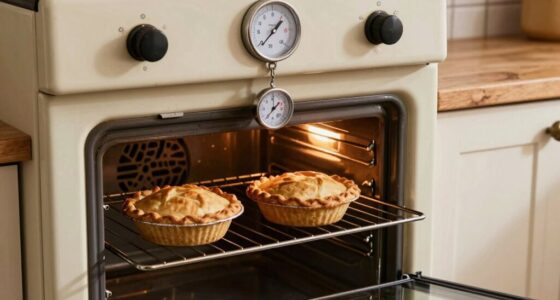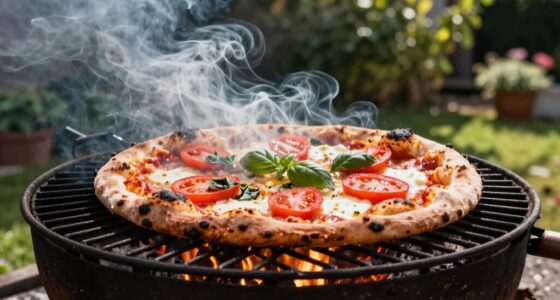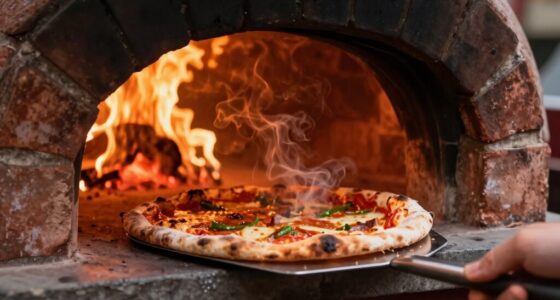
If your pizza sticks to the stone, it’s usually caused by insufficient preheating, dough with too much moisture, or not preparing the surface properly. Make sure your oven and stone are heated to about 500°F before baking, and dust the surface with flour or cornmeal lightly. Handling the dough quickly and confidently helps prevent sticking too. To learn more about preventing sticking and perfecting your pizza, keep exploring these key tips.

Get baking supplies delivered free with Prime
- Fast, free delivery on millions of items
- Prime Video, Amazon Music and more included
- Member-only deals all year
Key Takeaways
- Insufficiently preheated or cold stone causes dough to stick during transfer and baking.
- Using too little flour or cornmeal on the surface increases adhesion and sticking issues.
- Dough with high hydration or improper handling can be too sticky to slide easily.
- Baking at too low temperature prevents crust formation, leading to sticking.
- Delayed or hesitant transfer allows dough to set, increasing chances of sticking to the stone.

If you’ve ever baked a pizza on a stone and found it sticking, you’re not alone. It’s a common frustration that can ruin an otherwise perfect pie. Understanding the causes behind this issue can help you prevent it from happening again. One of the main factors is baking temperature. If the oven isn’t hot enough, the dough can stick to the stone because it doesn’t form a proper crust that releases easily. Conversely, if the temperature is too high, it can cause uneven cooking or charring, which might make sticking worse. Ideally, you want to preheat your oven and stone to a high, consistent temperature—usually around 500°F (260°C)—to mimic a wood-fired oven and ensure your pizza cooks quickly with a crisp crust that doesn’t cling.
Another critical element is dough hydration, which refers to the amount of water in your dough. If your dough has low hydration, it tends to be firmer and less sticky, but it might also be less elastic and harder to work with. On the other hand, high hydration dough is more moist and pliable, but it can sometimes stick more easily to the surface if not handled properly. Achieving the right dough hydration level is key; typically, a hydration level of around 60-65% (meaning 60-65 grams of water per 100 grams of flour) strikes a good balance. This level allows the dough to be elastic enough for stretching while reducing excess stickiness.
Prepping your pizza peel or baking surface correctly also plays a role. Dusting it with flour or fine cornmeal prevents the dough from sticking when you transfer it to the stone. Be generous but not excessive—too much can burn and create a mess, while too little might lead to sticking. When you place the dough on the hot stone, it’s best to slide it quickly to avoid the dough sticking as it begins to set. Additionally, ensure your stone is properly preheated and dry before baking, as residual moisture or cold spots can contribute to sticking issues.
As an affiliate, we earn on qualifying purchases.
Frequently Asked Questions
Can Using Oil Prevent Sticking Without Affecting Crust Texture?
Using oil application can prevent sticking without substantially affecting crust texture if you use it sparingly. Lightly greasing your stone or dough surface creates a barrier that helps the pizza slide off easily. Just remember, too much oil may make the crust greasy or alter its crispiness. A thin, even layer is best, allowing you to avoid sticking while maintaining your desired crust texture.
How Does Humidity Influence Pizza Sticking to the Stone?
Humidity effects are like an uninvited guest at your pizza party, making the stone’s surface more clingy. Moisture impact causes the stone to absorb extra moisture, increasing the chances of sticking. When the air’s humid, water molecules settle on the stone, creating a sticky situation for your dough. To prevent this, keep your oven dry and avoid adding excess moisture, ensuring your pizza freely slides off like a well-oiled dance partner.
Is It Necessary to Preheat the Stone for Best Results?
Yes, preheating the stone is necessary for the best results. It benefits you by ensuring the stone reaches the ideal temperature, which helps create a crisp crust and prevents sticking. When you preheat properly, the stone’s temperature stabilizes, providing an even cooking surface. This reduces chances of pizzas sticking and allows for better browning. Always give your stone enough time to heat thoroughly before placing your pizza on it.
Are There Specific Types of Stones Less Prone to Sticking?
Like a painter choosing the right canvas, you’ll find that certain stone materials excel as baking surfaces and resist sticking. Cordierite stones, for instance, are less prone to pizza adhesion thanks to their durability and thermal stability. Cast iron stones also perform well, offering a naturally non-stick surface when seasoned properly. By selecting these specific stones, you create a smoother, more reliable baking experience, ensuring your pizza releases effortlessly, like a perfect work of art.
How Often Should I Clean My Pizza Stone to Avoid Sticking?
You should clean your pizza stone after every few uses to prevent sticking, but don’t overdo it—frequent cleaning can strip away the seasoning. Focus on maintaining a well-seasoned stone, which helps reduce sticking. Use a brush or scraper for removing residue, and avoid soap. Regularly cleaning and re-seasoning your pizza stone guarantees it stays non-stick and performs well, making your homemade pizzas perfect every time.
As an affiliate, we earn on qualifying purchases.
Conclusion
So, next time your pizza sticks to the stone, remember it’s not a failure but a lesson. Just like a burnt crust, it’s a reminder to tweak your technique. With patience and practice, you’ll get that perfect, crispy crust—no sticking, just deliciousness. Instead of frustration, see it as a step closer to pizza perfection. After all, even the best chefs face setbacks; it’s how you bounce back that counts.
pizza peel with non-stick surface
As an affiliate, we earn on qualifying purchases.
As an affiliate, we earn on qualifying purchases.
As an affiliate, we earn on qualifying purchases.
Halloween Picks
halloween
As an affiliate, we earn on qualifying purchases.