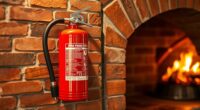
Using dry wood instead of wet wood makes your fire safer and more efficient. Wet wood produces more smoke, soot, and creosote, increasing fire risks and health hazards from pollutants. It also burns unevenly, with less heat and control. Choosing properly dried wood reduces the chance of chimney fires and harmful emissions, making your fire use safer overall. Keep exploring to discover how proper wood moisture levels can improve your safety and burning experience.
Key Takeaways
- Dry wood burns cleaner, reducing smoke, soot, and creosote buildup that can cause chimney fires.
- Wet wood produces more smoke and pollutants, increasing health risks from hazardous indoor air and outdoor emissions.
- Burning dry wood achieves higher temperatures, ensuring safer, more efficient fires with less risk of dangerous smoke leaks.
- Wet wood increases the likelihood of chimney fires due to creosote deposits and incomplete combustion hazards.
- Properly stored dry wood enhances fire safety by decreasing moisture-related risks and promoting better control of combustion.

Have you ever wondered why some fires burn brightly while others sputter out? It all comes down to the moisture content of your wood. When you choose between dry and wet wood, you’re directly influencing how well your fire burns and how safe it is. Wet wood, which has high moisture content, makes combustion less efficient. Instead of fueling a steady, hot fire, it causes smoke, soot, and creosote buildup. This not only reduces the heat output but increases the risk of chimney fires due to the creosote that condenses inside the flue. When you burn wet wood, you’re fundamentally fighting against the natural process, making it harder to reach ideal combustion efficiency. That inefficiency leads to incomplete burning, producing more smoke and pollutants, which can be dangerous when inhaled and can also cause dangerous buildup in your chimney. Proper sizing and load planning tools can help ensure your firewood piles are kept at optimal moisture levels for safety and efficiency.
Choosing dry wood improves combustion efficiency considerably. When the moisture content drops below 20%, your fire can reach higher temperatures and burn more cleanly. This means less smoke and fewer creosote deposits, reducing fire hazards and making your fireplace safer to use. Dry wood ignites easily, producing a hotter, more consistent flame that helps you control the fire better. You’ll find that your stove or fireplace heats the space faster and more evenly, which not only enhances comfort but also conserves fuel. Burning dry wood also minimizes the risk of dangerous smoke leaks into your living space, which can cause health problems over time.
Frequently Asked Questions
How Does Moisture Content Impact Stove Efficiency?
Moisture content considerably impacts stove efficiency because higher moisture levels lower combustion quality. When you measure moisture accurately through moisture measurement, you’ll know if your wood needs more seasoning. Properly seasoned wood has low moisture content, ensuring better heat output and cleaner burns. Using well-seasoned wood improves efficiency, reduces creosote buildup, and makes your stove safer and more effective. Always choose properly dried, seasoned wood for ideal performance.
Can Wet Wood Cause Chimney Creosote Buildup?
Wet wood can definitely cause chimney creosote buildup because it produces more smoke and incomplete combustion. This increases creosote formation, which can clog your chimney and pose fire hazards. To prevent this, prioritize chimney maintenance and burn only properly seasoned dry wood. Regular inspections help identify creosote buildup early, ensuring your chimney stays safe and efficient. Avoid using wet wood to keep your chimney clear and reduce fire risks.
What Safety Risks Are Associated With Burning Wet Wood?
Burning wet wood might seem harmless, but it’s a risky game. You increase the fire hazard because it smolders poorly, producing excess smoke and creosote buildup. Plus, the moisture encourages mold growth in your home, which you definitely don’t want. So, while soaking your wood might seem convenient, it actually puts your safety at risk by creating dangerous conditions and fostering mold. Better to dry it first!
How Do I Test Wood Moisture Levels Accurately?
To test wood moisture levels accurately, you should use a moisture meter, which provides quick and precise readings. Insert the meter’s probes into the wood to measure its moisture content directly. For best results, make certain your wood has been properly dried through air drying or kiln drying, and check multiple spots to confirm consistent moisture levels. This helps you burn dry wood, reducing safety risks and improving efficiency.
Does Burning Wet Wood Produce More Smoke or Pollutants?
Burning wet wood produces up to 50% more smoke and pollutant emissions, markedly impacting air quality. When you burn wet wood, it doesn’t burn efficiently, leading to increased smoke production and harmful emissions like particulate matter and volatile organic compounds. This not only affects your health but also contributes to environmental pollution. To minimize smoke and pollutants, always use properly seasoned, dry wood for your fires.
Conclusion
Choosing dry wood is like lighting a spark in a well-tuned engine—smooth, safe, and powerful. Wet wood, on the other hand, is a stubborn ember that’s hard to catch and even harder to control, risking dangerous smoke and creosote buildup. By selecting dry fuel, you’re opening the door to a warm, crackling fire that dances safely in your hearth, inviting comfort without chaos. Make the right choice, and let your fire blaze bright and safe.