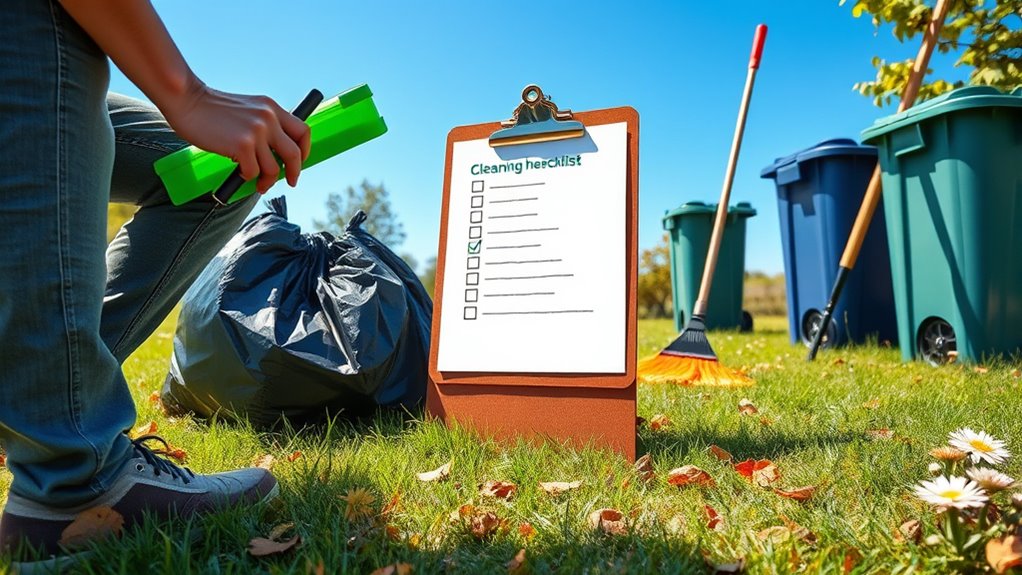

Before you start outdoor cleanup, organize your tools, making sure they’re safe and working properly. Wear protective gear like gloves, goggles, and sturdy shoes to keep yourself safe. Clear the area of tripping hazards, set up your workspace, and check ladders or climbing equipment for stability. Follow safety precautions at all times and handle power tools carefully. If you want to guarantee your outdoor cleanup is safe and effective, keep going – there’s more to learn!
Open a free Amazon Business account
Business pricing, bulk buying and tax-exempt orders.
As an affiliate, we earn on qualifying purchases.
Key Takeaways
- Gather and inspect all tools to ensure they are sharp, functional, and safe to use.
- Clear the outdoor area of hazards like debris, cords, and uneven ground for safe movement.
- Wear protective gear such as gloves, goggles, and sturdy footwear during cleanup.
- Organize workspace by designating trash zones and setting up ladders or equipment securely.
- Follow safety procedures for power tools and equipment, including disconnecting power before adjustments.
As an affiliate, we earn on qualifying purchases.
Essential Outdoor Cleanup Preparation Tips
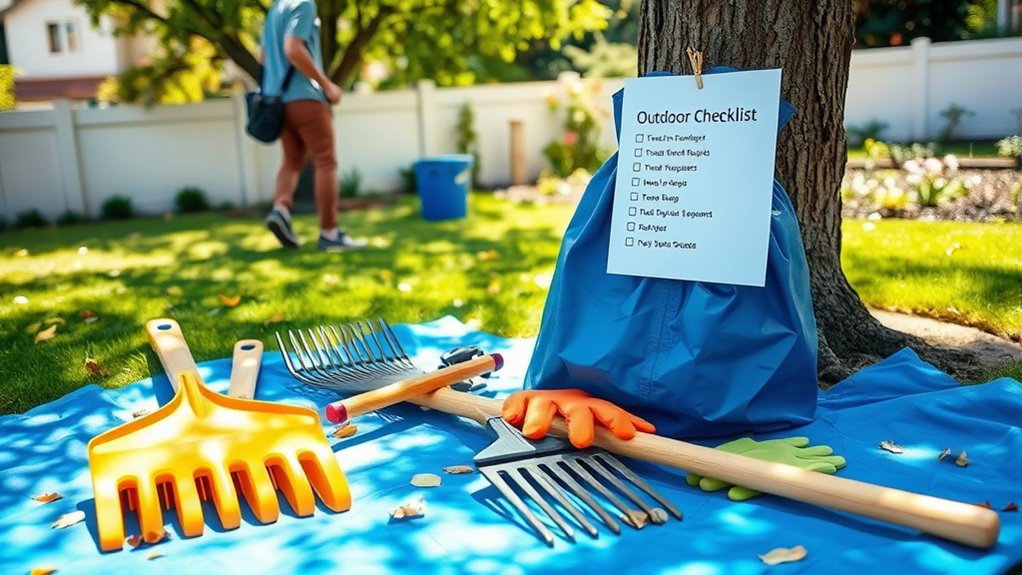
Getting outdoors for cleanup work requires a clear plan to guarantee efficiency and safety. Before you start, it’s essential to gather the right garden tools, such as pruning shears, rakes, shovels, and gloves, to make the task smoother and more effective. Using the proper tools not only speeds up the process but also minimizes the risk of injury. Make sure all your tools are in good condition—sharp blades, sturdy handles, and functioning mechanisms—so you don’t have to struggle or work with unsafe equipment. Check for loose screws or rust, and replace or repair any damaged tools beforehand. This preparation helps prevent accidents and saves time during your cleanup.
Safety precautions should be at the forefront of your planning. Always wear appropriate protective gear—gloves to protect your hands, eye goggles to shield your eyes from debris, and sturdy footwear to prevent slips or injuries. If you’re working around thorny bushes, sharp tools, or uneven terrain, take extra care to avoid cuts, punctures, or falls. Keep a first aid kit nearby, just in case, and know the location of the nearest emergency services. When handling tools, focus on maintaining a firm grip and proper posture; avoid overreaching or using tools in a way they aren’t designed for. If you’re using power tools like leaf blowers or lawn mowers, double-check that they’re in good working order, and follow all manufacturer safety instructions. Never work with damaged or malfunctioning equipment, and always disconnect power before making adjustments or cleaning your tools. Additionally, understanding the role of contrast ratio in projectors can help you gauge how well your outdoor lighting setup will support clear visibility during cleanup.
Planning a safe cleanup also involves establishing a clear workspace. Clear the area of tripping hazards such as hoses, cords, or loose debris before you start. Designate specific zones for collecting yard waste and debris, making it easier to dispose of everything later. Keep walkways clear and ensure there’s enough space to maneuver safely with your tools. If using ladders or climbing equipment, inspect them thoroughly and set them up on stable ground. Always face the ladder when climbing and avoid overreaching to prevent falls. Additionally, be aware of your surroundings—watch out for low-hanging branches, uneven ground, or hidden obstacles that could cause accidents.
As an affiliate, we earn on qualifying purchases.
Frequently Asked Questions
How Often Should I Perform Outdoor Cleanup Tasks?
You should perform outdoor cleanup tasks seasonally, typically in spring and fall. During these times, focus on seasonal pruning to promote healthy growth and remove dead or overgrown branches. Regularly check for pests and apply pest control as needed to safeguard your plants. Additionally, clear debris and fallen leaves to prevent disease. Maintaining this routine guarantees your outdoor space stays healthy, attractive, and pest-free throughout the year.
What Tools Are Essential for Outdoor Cleanup?
Think of yourself as a gardener tending to a wild landscape. Essential tools include sturdy garden tools like rakes, shovels, pruners, and gloves to handle debris and weeds. Don’t forget outdoor supplies like trash bags, watering cans, and safety gear. These tools make cleanup efficient and safe, helping you restore your outdoor space to its best condition. Keep them handy, and you’re ready to tackle any outdoor mess.
How to Handle Outdoor Waste Disposal Responsibly?
To handle outdoor waste disposal responsibly, start by separating garden debris from other waste. Compost organic matter like leaves and grass clippings to reduce landfill, and bag or haul away non-compostables properly. Regularly dispose of yard waste at local recycling centers or designated collection sites. This practice helps prevent pest problems, keeps your outdoor space clean, and promotes eco-friendly pest prevention, ensuring a healthier environment for your garden and neighborhood.
Are There Safety Precautions for Using Outdoor Cleaning Equipment?
Safety’s the shield that guards you when using outdoor cleaning equipment, so never skip protective gear like gloves, goggles, and sturdy footwear. Remember, equipment maintenance is your best defense—regularly inspect and clean tools to prevent accidents. Think of safety precautions as your armor, ensuring you work confidently and avoid injuries, because staying protected isn’t just smart—it’s essential for a smooth cleanup.
When Is the Best Time of Year for Outdoor Cleanup?
The best time of year for outdoor cleanup depends on seasonal considerations and weather impacts. Spring is ideal for clearing away winter debris and preparing your yard for summer, while fall is perfect for raking leaves and tidying up before winter. Avoid heavy outdoor work during extreme weather conditions like storms or freezing temperatures, as these can make cleanup unsafe and less effective. Plan your cleanup when the weather is mild and predictable.
As an affiliate, we earn on qualifying purchases.
Conclusion
Think of your outdoor cleanup as tending to a garden. With each tool you use and every step you take, you’re planting seeds for a brighter, cleaner space. Stay organized like a gardener planning their rows, and don’t rush the process. As you clear away debris and set things straight, you’re nurturing your outdoor oasis. Keep this rhythm in mind, and your cleanup will flourish into a beautiful, well-maintained retreat you can enjoy all year round.
As an affiliate, we earn on qualifying purchases.
NFL season / tailgating Picks
team gear
As an affiliate, we earn on qualifying purchases.