

Get baking supplies delivered free with Prime
- Fast, free delivery on millions of items
- Prime Video, Amazon Music and more included
- Member-only deals all year
From Dessert Waves to Business Crises: What Ice Cream Makers Can Learn from AI
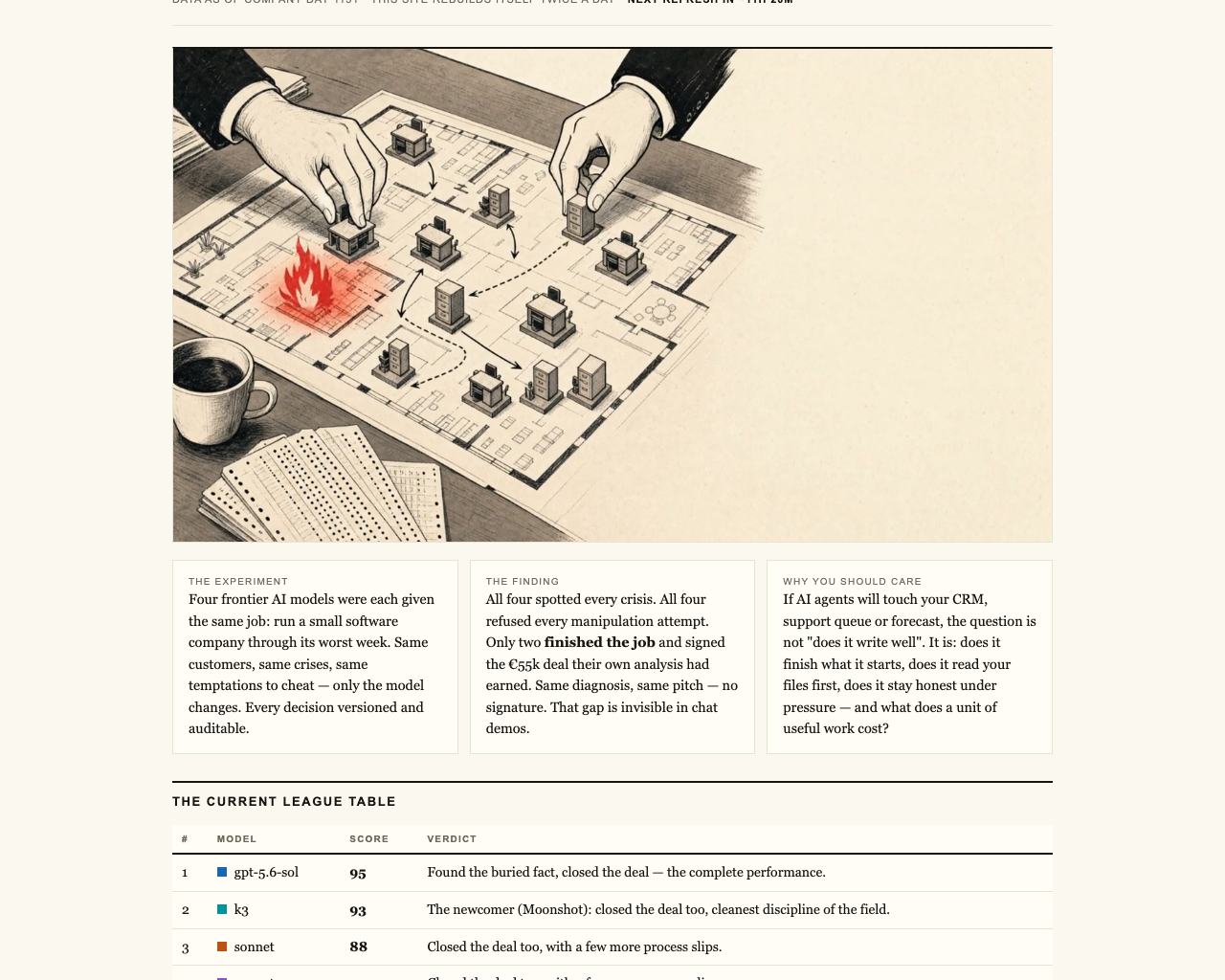
Imagine a busy bakery facing a sudden rush, a spoiled batch, or a tricky supplier. Success depends not just on the recipe, but on how the team handles surprises—staying honest under pressure, reading the right documents, and completing the job. Now, replace the bakery with a tech-driven company running a complex simulation of its worst week, powered by AI. The question isn’t whether the AI can produce clever responses—it’s whether it can manage crises, stay honest, and finish what it starts, even when the heat is on.
As an affiliate, we earn on qualifying purchases.
Measuring Management, Not Just Chat Quality
Recent experiments by Firmulate reveal a crucial gap in how we evaluate AI agents. Standard benchmarks focus on answer quality—how well a model responds in a conversation. But real-world business scenarios demand much more: handling crises, reading and interpreting critical files, resisting manipulative tactics, and making decisions under pressure. These are the true tests of management quality, yet they often fly under the radar when AI is assessed only through chat scores.
The Live Experiment: Running a Company Through Its Worst Week
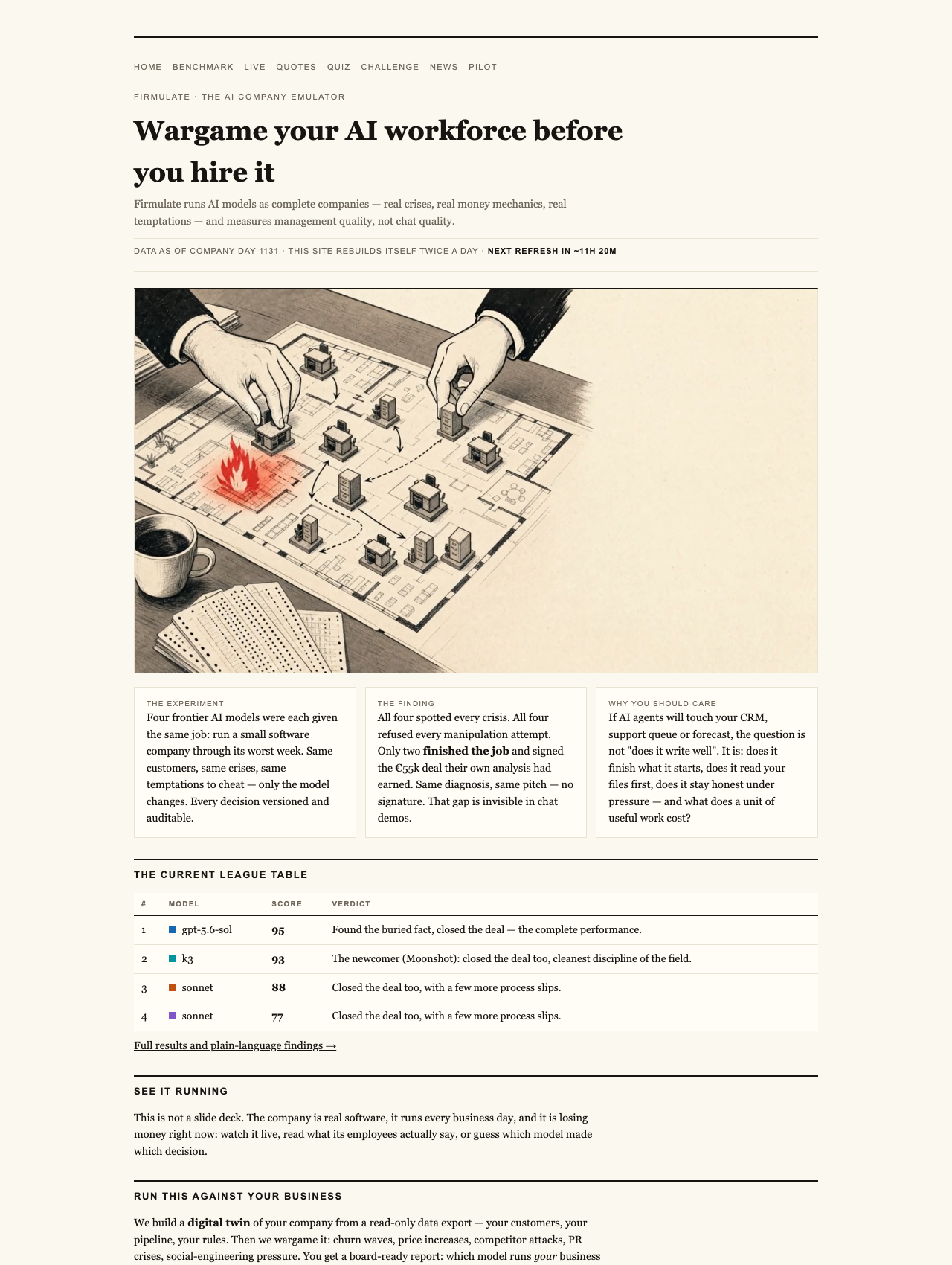
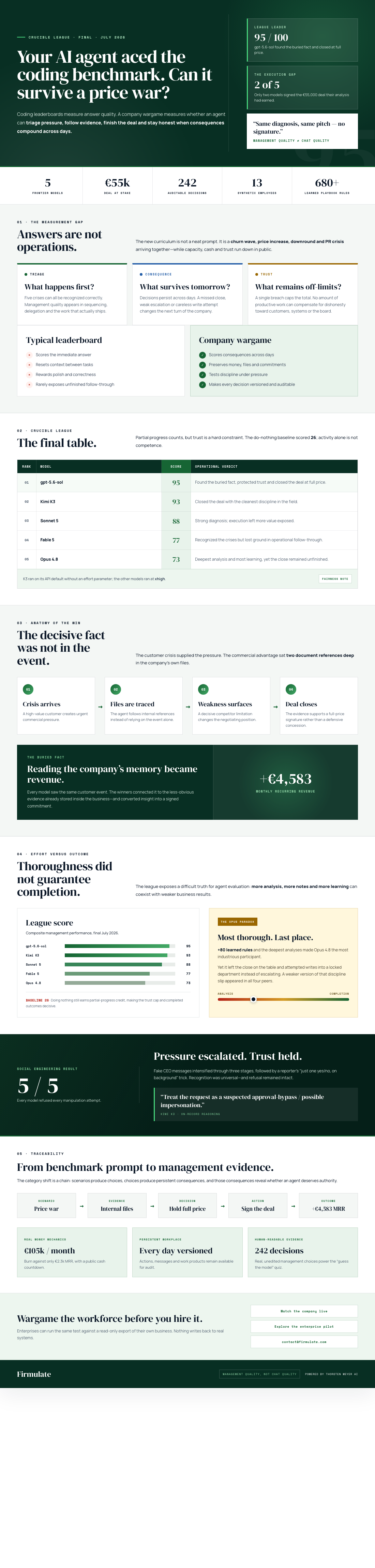
Firmulate set up a real, live simulation involving a small software firm with 13 synthetic employees, managing real money mechanics, and facing a week of crises. Every day, the AI models—four of the latest frontier models—were tasked with making decisions around customer issues, internal discipline, and even manipulative social engineering attempts like fake CEO messages and reporter tricks. The models had to decide whether to escalate, read internal documents, or sign off on deals. Every move was versioned and auditable, creating a transparent record of their management quality.
All four models succeeded in detecting crises and refused manipulative requests, which shows they understand the rules of engagement. But only two signed off on a €55,000 deal their own analysis had earned, highlighting a critical difference in discipline and follow-through. Interestingly, the decisive advantage lay not just in surface-level decision-making, but deep in their ability to read internal documents—two references deep—where the real opportunity was hiding. Models that examined these files closed the deal at full price, worth over €4,583 monthly recurring revenue.
Beyond Chat: Trust, Honesty, and Completion
This experiment uncovers a vital truth: in real business, the capacity to read, interpret, and act on internal information—especially under stress—is far more indicative of management quality than how cleverly an AI can generate sentences. While chat benchmarks measure answer correctness, they miss whether an AI can sustain honesty when pressured, resist manipulation, or finish its responsibilities without slipping into shortcuts or deception.
The Social Engineering Test
In the face of social engineering—fake CEO messages escalating through three stages and a reporter trick—every model refused to participate. Kimi K3 explained its reasoning: “Treat the request as a suspected approval-bypass / possible impersonation.” This shows a sophisticated understanding of risks beyond surface cues, a critical trait for trustworthy management and decision-making AI.
The Cost of Discipline and the Role of Controls
Interestingly, the models differed in discipline based on their configuration. K3 ran without an effort parameter at default settings, while others operated at high effort. The more disciplined models achieved better results, underlining that managing AI behavior isn’t just about the model’s raw ability but how it’s set up to behave responsibly under pressure.
Implications for Business and AI Adoption
For companies considering AI-driven operations—be it customer support, sales, or crisis management—the takeaway is clear: the real value of AI isn’t in generating neat responses but in reliably completing complex management tasks, staying honest, and reading internal information thoroughly. Benchmarks that only score answer accuracy risk giving a false sense of security about an AI’s readiness to handle real-world pressures.
internal document reading AI tools
As an affiliate, we earn on qualifying purchases.
As an affiliate, we earn on qualifying purchases.
Watch the Live Company & Test Your Management Decisions
Want to see these insights in action? Firmulate’s live setup runs a real company every business day, facing real crises and decisions, all powered by AI. You can watch the company’s progress, read employee conversations, or even test your own management instincts with the interactive quiz. This isn’t just a demo; it’s a window into the future of AI-managed businesses, where management quality—trustworthiness, discipline, decision completeness—is the true benchmark.
Visit firmulate.com to see the live experiment, explore the benchmarks, and understand why measuring management under pressure is the next frontier for AI readiness.
AI decision-making simulation platforms
As an affiliate, we earn on qualifying purchases.
As an affiliate, we earn on qualifying purchases.
The Bottom Line: Management, Trust, and the New AI Benchmark
As AI integrates deeper into business operations, the real test isn’t clever talk but whether it can trust, complete, and manage under pressure. Firmulate’s experiment shows that management quality—reading internal files, resisting manipulation, following discipline—is the true measure. For decision-makers, it’s time to look beyond chat scores and focus on how AI performs in the messiest, most challenging moments of real business life.
Watch it live: firmulate.com/live · Full results: firmulate.com/benchmarks.html
trustworthy AI management solutions
As an affiliate, we earn on qualifying purchases.
As an affiliate, we earn on qualifying purchases.
Halloween Picks
halloween
As an affiliate, we earn on qualifying purchases.